



Skip to content
airthings-business-voc-smoke-cloud-smooth
SENSOR

VOC

VOCs measure the level of airborne chemicals in the air and provide insight

into pollution released from products, materials and activities within a space.

What are VOCs?

Volatile Organic Compounds (VOCs) are the measurement of gases emitted from chemicals found in everyday products and materials, typically expressed as total VOCs (TVOC) in parts per billion (ppb) or micrograms per cubic meter (µg/m³). In commercial buildings, common sources include cleaning products, new furniture, carpets, paints, adhesives, printers and fragrances, and levels often spike during renovations or after cleaning. Measuring VOCs helps building, workplace and facility teams detect chemical pollution early and see when spaces need more ventilation.

VOC (1)

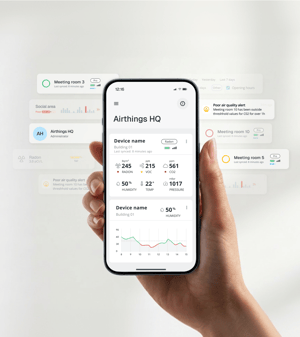
Stop reacting. Start optimizing.

Gain complete visibility into your building operations, eliminate budget surprises,
and transition from "firefighting" to high-performance management.
facility_manager_notifications

Built for facility mangers

Save time

→ Get a quick overview of your entire portfolio from anywhere

→ Prioritize worst-performing spaces first

→ Generate compliance reports in minutes, not hours

Stay ahead of problems

→ Real-time alerts when conditions exceed thresholds

→ Use trend data to predict and prevent issues

→ Fix problems before they become complaints

Seamless integration

→ Connect to your BMS for automated HVAC optimization
→  Receive alerts in Slack, Teams, or email
→  API access for custom dashboards and analytics


Easy to deploy and maintain

→ Fully wireless sensors, no complex cabling
→  Long battery life means minimal maintenance
→ Scale easily as your portfolio grows


● THE WHY 

Why does VOCs matter?

VOCs aren't just unpleasant odors. They affect occupant health and wellbeing, and indoor air can be up to five times more polluted than outdoor air.

Humidity 1 (1)

Protect occupant health


Exposure to VOCs can cause headaches, dizziness and irritation of the eyes, nose and throat, and long-term exposure to high levels is linked to more serious health effects. Keeping VOC levels low helps employees and students feel well and stay focused.
Humidity 2

Identify pollution sources

 
VOC levels often rise after cleaning, during renovations or when new furniture and materials are installed. Monitoring VOCs helps you pinpoint when and where pollution occurs, so you can adjust cleaning routines, choose low-VOC products and keep spaces safe after refurbishments.
crosshair

Ventilate at the right time


Since VOCs build up in poorly ventilated spaces, real-time data shows when fresh air is needed most. This can help your HVAC systems respond to actual pollution levels, clearing the air effectively without wasting energy on unnecessary ventilation.
Dashboard image

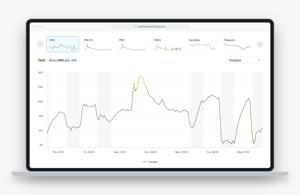
VOCs over time

Track airborne chemical levels across rooms and buildings in real time. See when cleaning, renovations or new furniture cause VOCs to rise and follow trends over time, so your team can ventilate at the right moments and keep the air healthy for everyone inside.

airthings-voc-dashboard (1)

● GET STARTED

See VOC levels in your buildings

Curious about the VOC levels in your buildings? We'll show you what VOC look like in the Airthings dashboard.

particle-logo

Stop ventilating empty rooms

Our sensors detect when people are actually present. Integrate with your BMS to reduce HVAC run-time by up to 30%.

See how Toma saved 26% on energy bills ->

Ventillation (1)

Resolve complaints with facts

When a tenant claims air quality is poor, share a live link to the data. Prove your building is performing - or spot the exact issue instantly.


Explore dashboard ->

facts (2)