



Skip to content
airthings-humidity-bokeh-1
SENSOR

Humidity

Humidity measures the amount of moisture present in the air and

provides insight into the environmental conditions within a space.

What is humidity?

Humidity is the measurement of the amount of water vapor present in the air, typically expressed as relative humidity (RH) in percent. Relative humidity shows how much moisture the air holds compared to the maximum it can hold at a given temperature, which is why heating and cooling have a direct effect on humidity levels. In commercial buildings, humidity is influenced by weather, seasons, ventilation and daily activities such as cooking, cleaning and the number of people in a space. Measuring humidity helps building, workplace and facility teams keep spaces comfortable and spot where moisture control or ventilation needs improvement.

Humidity (2)

Stop reacting. Start optimizing.

Gain complete visibility into your building operations, eliminate budget surprises,
and transition from "firefighting" to high-performance management.
facility_manager_notifications

Built for facility mangers

Save time

→ Get a quick overview of your entire portfolio from anywhere

→ Prioritize worst-performing spaces first

→ Generate compliance reports in minutes, not hours

Stay ahead of problems

→ Real-time alerts when conditions exceed thresholds

→ Use trend data to predict and prevent issues

→ Fix problems before they become complaints

Seamless integration

→ Connect to your BMS for automated HVAC optimization
→  Receive alerts in Slack, Teams, or email
→  API access for custom dashboards and analytics


Easy to deploy and maintain

→ Fully wireless sensors, no complex cabling
→  Long battery life means minimal maintenance
→ Scale easily as your portfolio grows


● THE WHY 

Why does humidity matter?

Humidity isn't just about comfort. It affects occupant health, the condition of your building and how efficiently your HVAC systems run.

Humidity 1 (1)

Protect occupant health


High humidity fosters mold and dust mites, while dry air irritates airways and speeds up the spread of airborne viruses. Keeping humidity in the optimal 40–60% range keeps your workforce healthy, comfortable, and productive.
Humidity 2

Preserve building health


Excess moisture can lead to condensation, structural rot, and expensive damage to materials like wood and drywall. Monitoring humidity levels helps you catch ventilation issues early, protecting your real estate investment from costly repairs.
crosshair

Optimize HVAC efficiency


Damp air feels warmer than it is, often causing people to crank up the AC unnecessarily. By managing humidity alongside temperature, your HVAC systems can run smarter, drastically lowering energy consumption without sacrificing indoor comfort.
Dashboard image

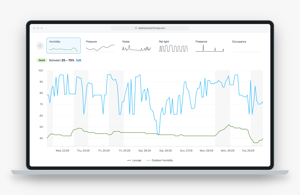
Humidity over time

Track humidity levels across rooms and buildings in real time. See when air becomes too dry or too damp and follow trends over time, so your team can prevent moisture problems, protect the building and keep spaces comfortable for everyone inside.


airthings-humidity-dashboard

● GET STARTED

See the humidity in your buildings

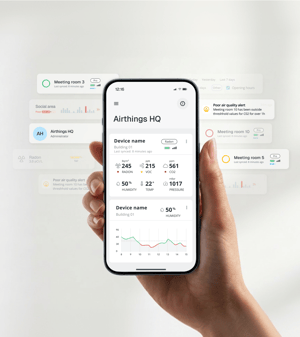
Curious about the humidity levels in your buildings? We'll show you what humidity looks like in the Airthings dashboard.

particle-logo

Stop ventilating empty rooms

Our sensors detect when people are actually present. Integrate with your BMS to reduce HVAC run-time by up to 30%.

See how Toma saved 26% on energy bills ->

Ventillation (1)

Resolve complaints with facts

When a tenant claims air quality is poor, share a live link to the data. Prove your building is performing - or spot the exact issue instantly.


Explore dashboard ->

facts (2)