



Pressure
Air pressure measures the force exerted by the air around us and
provides insight into how weather and building conditions affect a space.
What is air pressure?
Air pressure, also known as barometric pressure, is the measurement of the force that air molecules exert on all surfaces, typically expressed in hectopascals (hPa) or millibars (mbar). It changes with weather, temperature and altitude, and the pressure inside a building can differ from the pressure outside. This balance affects how air, heat and moisture move in and out of a building. Measuring air pressure helps building, workplace and facility teams understand how pressure conditions affect ventilation, energy use and indoor air quality.

Stop reacting. Start optimizing.
Gain complete visibility into your building operations, eliminate budget surprises,and transition from "firefighting" to high-performance management.

Built for facility mangers
→ Get a quick overview of your entire portfolio from anywhere
→ Prioritize worst-performing spaces first
→ Generate compliance reports in minutes, not hours
→ Real-time alerts when conditions exceed thresholds
→ Use trend data to predict and prevent issues
→ Fix problems before they become complaints
→ Connect to your BMS for automated HVAC optimization
→ Receive alerts in Slack, Teams, or email
→ API access for custom dashboards and analytics
→ Fully wireless sensors, no complex cabling
→ Long battery life means minimal maintenance
→ Scale easily as your portfolio grows
Why does pressure matter?
Air pressure isn't just a weather metric. It influences how air moves through your building, affecting energy costs, building health and other air quality factors.
Optimize HVAC energy use
When pressure inside and outside a building is out of balance, unconditioned air is drawn in through gaps and openings. This forces HVAC systems to work harder to heat or cool spaces, and pressure data helps you understand and reduce this hidden energy loss.
Prevent moisture damage
In colder months, higher indoor pressure can push warm, humid air into walls and building structures, where it may condense. Over time, this can lead to mold and material damage, making pressure an important factor in preventing moisture problems.
Track radon changes
Pressure changes affect how much radon is drawn into a building from the ground, especially when indoor pressure drops. Monitoring pressure alongside radon helps you understand why levels fluctuate and adjust ventilation to keep exposure low.
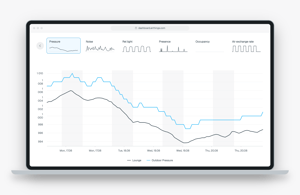
Pressure over time
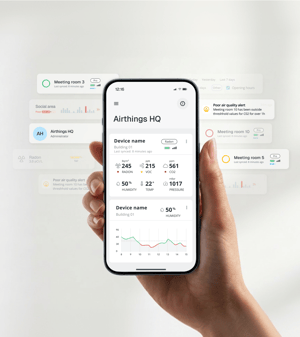
Track air pressure across rooms and buildings in real time. See how weather and building conditions cause pressure to change and follow trends over time, so your team can better understand shifts in radon levels, ventilation and energy use.

● GET STARTED
See the air pressure in your buildings
Curious about the air pressure in your buildings? We'll show you what air pressure looks like in the Airthings dashboard.

Explore related insights
Pressure is one signal among many. Combine it with these for a complete view of your indoor environment.
PM1
PM2.5
Radon
VOC
Temperature
Humidity
Light
Pressure
Noise
Virus risk
Mold risk
Ventilation rate
Space utilization
Stop ventilating empty rooms
Our sensors detect when people are actually present. Integrate with your BMS to reduce HVAC run-time by up to 30%.
See how Toma saved 26% on energy bills ->
Resolve complaints with facts
When a tenant claims air quality is poor, share a live link to the data. Prove your building is performing - or spot the exact issue instantly.