


Skip to content
radon-from-soil-Rn222
SENSOR

Radon

Radon measures the concentration of radioactive gas in the air, formed naturally in the ground

beneath buildings, and shows if occupants face a hidden long-term health risk.


What is radon?

Radon is the measurement of the amount of naturally occurring radioactive gas present in the air, typically expressed in becquerels per cubic meter (Bq/m³) or picocuries per liter (pCi/L). Radon forms when uranium in soil and rock breaks down, and it enters buildings through cracks and openings in the foundation. It is invisible, odorless and found everywhere, and levels can vary greatly between buildings, and even between rooms in the same building. Measuring radon helps building, workplace and facility teams identify areas with elevated exposure and confirm that ventilation and mitigation are working.


Radon (3)

Stop reacting. Start optimizing.

Gain complete visibility into your building operations, eliminate budget surprises,
and transition from "firefighting" to high-performance management.
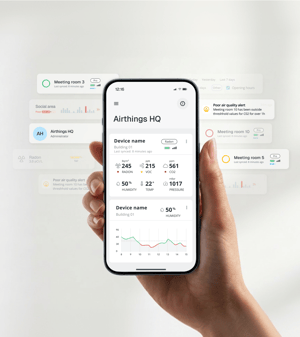
facility_manager_notifications

Built for facility mangers

Save time

→ Get a quick overview of your entire portfolio from anywhere

→ Prioritize worst-performing spaces first

→ Generate compliance reports in minutes, not hours

Stay ahead of problems

→ Real-time alerts when conditions exceed thresholds

→ Use trend data to predict and prevent issues

→ Fix problems before they become complaints

Seamless integration

→ Connect to your BMS for automated HVAC optimization
→  Receive alerts in Slack, Teams, or email
→  API access for custom dashboards and analytics


Easy to deploy and maintain

→ Fully wireless sensors, no complex cabling
→  Long battery life means minimal maintenance
→ Scale easily as your portfolio grows


● THE WHY 

Why does radon matter?

Radon isn't just a building metric. It is a serious health risk that is impossible to detect without monitoring, and one that employers and building owners are often responsible for managing.

Humidity 1 (1)

Protect occupant health


Radon is the leading cause of lung cancer among non-smokers. When inhaled over time, its radioactive particles can damage cells in the lungs. Children are especially sensitive, making radon monitoring essential in schools and daycare centers.
Radon 2

Meet regulations


Many countries set reference levels for radon in workplaces and schools, and building owners are often required to measure and take action. Continuous monitoring gives you the data and documentation needed to demonstrate compliance and fulfill your duty of care.
Radon 3

Catch changing levels early


Radon levels fluctuate with weather, seasons, ventilation and building use, and can rise sharply at night or when HVAC systems are switched off. Continuous monitoring reveals these patterns, helping you adjust ventilation and confirm that mitigation measures are working over time.
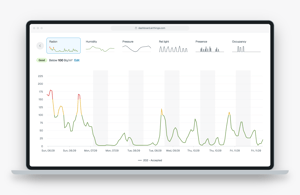
Dashboard image

Radon levels

Track radon levels across rooms and buildings with continuous monitoring. See how levels change with weather, seasons and ventilation, so your team can confirm that mitigation is working, document compliance and keep exposure low for employees, students and visitors.

airthings-radon-dashboard

● GET STARTED

See radon levels in your buildings

Curious about the radon levels in your buildings? We'll show you what radon looks like in the Airthings dashboard.

particle-logo

Stop ventilating empty rooms

Our sensors detect when people are actually present. Integrate with your BMS to reduce HVAC run-time by up to 30%.

See how Toma saved 26% on energy bills ->

Ventillation (1)

Resolve complaints with facts

When a tenant claims air quality is poor, share a live link to the data. Prove your building is performing - or spot the exact issue instantly.


Explore dashboard ->

facts (2)