What is mold? Learn why it grows inside homes, and how to stop it from coming back
TL;DR: Mold is a microscopic fungus that grows on organic matter. Mold spores are found everywhere, indoors and outdoors. When they settle on a damp surface with access to organic matter and moisture, they will develop into mold. Moisture inside your home is one factor that you can control. If you can keep indoor relative humidity below 60%, then mold is far less likely to develop.
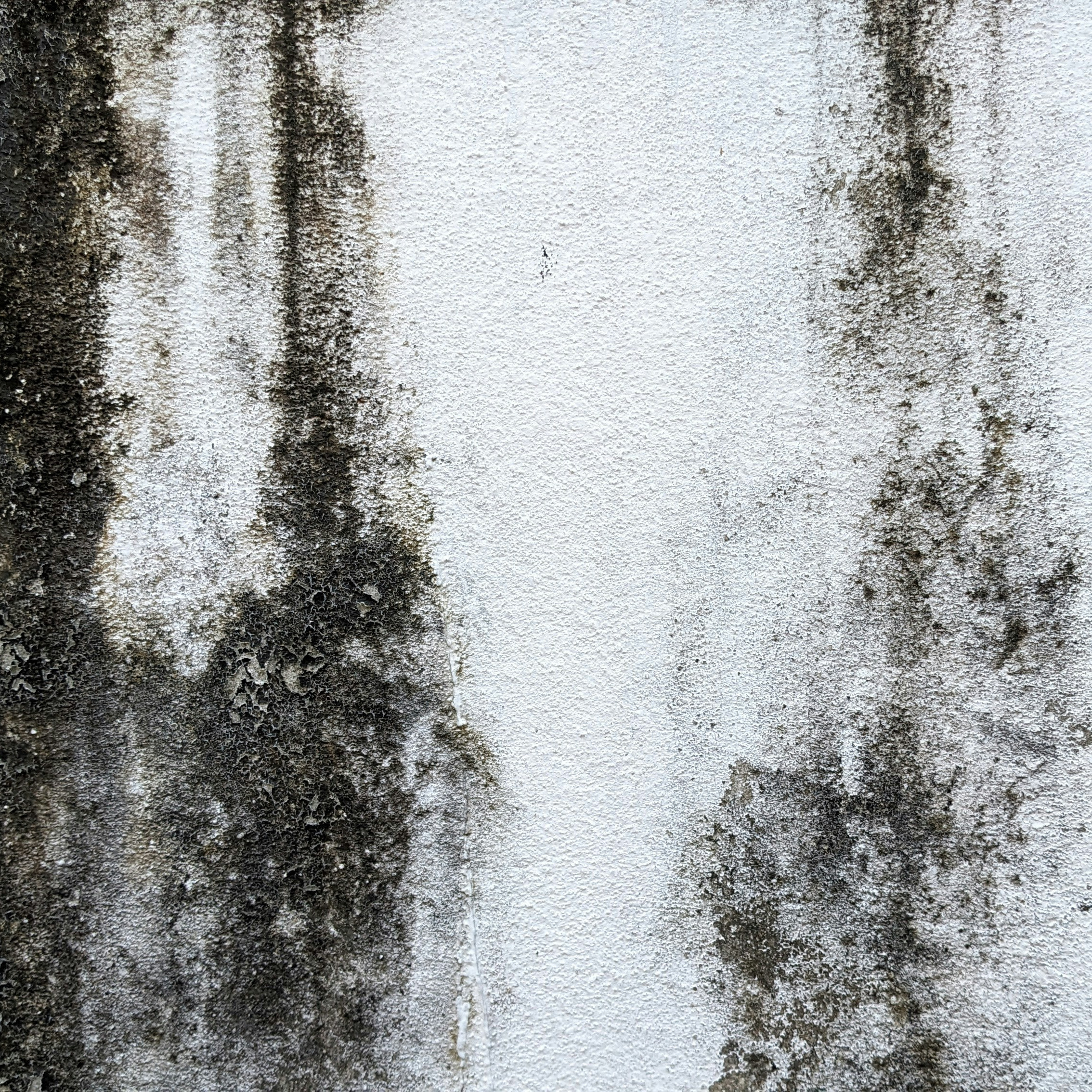
Living in a damp, moldy home can lead to serious health issues. Mold can cause coughing, wheezing, worsening asthma symptoms, or even the development of asthma in children, as well as exacerbation of allergy symptoms. Mold also damages furniture, flooring, drywall, furnishings, and even clothing. Because mold risk builds over time from humidity and temperature rather than appearing overnight, a monitor that continuously tracks humidity will warn you if indoor moisture levels are consistently high, indicating that the risk of mold inside your home is elevated. Mold does take time to develop, but by the time you notice it growing in a corner or behind a sofa, it’s likely that you’ve been living with damp and humid conditions for a few weeks or months.
What is mold and how does it get into my home?
Mold is a type of fungus that exists naturally, indoors and out. Mold reproduces by releasing tiny spores that drift through the air and settle on the surfaces inside your home.
Mold spores are found everywhere and their presence isn't linked to poor hygiene or behavior. Mold spores can come through windows, via your clothes, and even from your pets. It’s virtually impossible to keep the spores out of your home.
However, it is possible to stop the spores from collecting and growing. Mold will only develop if it has these three things available:
- Spores
- Something organic to feed on: wood, plaster, paper, dust, or fabric; just about anything in your house
- Moisture: the one thing that you can control in your home. You can't stop spores from entering your home, but managing humidity will stop them from collecting and growing into mold.
Where does mold grow in a home?
Mold will develop where it finds moisture. Common areas for mold to develop are:
- Bathrooms: especially around showers and on the ceilings above them, and along sealant and grout in bathtubs
- Kitchens: behind and under sinks, around dishwashers, in corners of windows, behind other appliances
- Bedrooms: on exterior-facing walls behind furniture, such as behind a bed or wardrobe, and around single-glazed or poorly sealed windows where condensation forms overnight
- Basements and crawl spaces: particularly good for mold as it’s where ground moisture and poor ventilation combine
- Anywhere behind or beneath something: cupboards or sofas against cold walls, under carpets, behind headboards. Air doesn’t circulate well here and moisture can become trapped, leading to perfect conditions for mold
- Around any leak: a dripping pipe or a failed roof flashing will produce mold faster than any humidity problem
Why do cold outside walls grow mold even when the room feels dry?
Warm air can hold a lot more moisture than cold air. When warm, humid indoor air meets a cold surface, for example, an uninsulated exterior wall or a cold window pane, the air here cools quickly, and its relative humidity will quickly rise. This is why mold often appears behind something that’s against a colder surface: the furniture blocks air movement, keeping that surface colder and damper than the rest of the room.
Is mold a common problem?
Yes, according to the National Institute for Occupational Safety and Health (NIOSH), nearly 47% of residential buildings in the United States have visible or detectable mold. In terms of its impact on the population, no recent large-scale study exists, though EPA-reviewed studies suggest that living in a damp, moldy home can increase the risk of respiratory and asthma-related health outcomes by up to 53%. A 2007 study found that 21% of current US asthma cases may be attributable to dampness and mold exposure in homes, representing approximately 4.6 million Americans.
What humidity level prevents mold?
The practical answer is to keep indoor relative humidity below 60%. The ideal humidity level for health, comfort, and also protecting your home is 30–50%.
“Mold risk” is, however, hard to calculate. It’s a combination of how humid your air is, how warm a room is, and how long these conditions have existed. You’ll naturally have more humidity in your home if you take a warm shower or boil something on the stove. These are short-lived spikes that won’t cause mold. A constant relative humidity of 65% in an under-ventilated space for a couple of weeks or more will likely lead to mold growth.
How does mold affect your health?
Damp and mold in homes are linked to several health issues:
- Coughing, wheezing and shortness of breath
- Worsening of existing asthma, and more frequent attacks
- Allergic rhinitis, sneezing, blocked or runny nose, itchy eyes
- Throat and skin irritation
If any of the above symptoms seem to disappear when you leave your home, and then develop once you return, it could be worth investigating whether you have a damp or mold issue.
People with asthma, existing allergies, compromised immune systems, infants and older adults are more affected than the general population.
Is black mold dangerous?
“Black mold” generally refers to Stachybotrys chartarum, which is often deemed to be the most frightening type of mold to find in your home. However, it is usually no more dangerous than other types of mold, and studies reviewed by the CDC suggest it is no more toxic than other species. Any mold growing indoors should be removed, and the underlying humidity issue addressed to prevent its return.
How do I get rid of mold?
Physically washing mold away is straightforward. However, simply removing it without addressing the underlying dampness issue means it’ll just come back again.
Follow these steps to remove and prevent mold from returning:
- Find and fix the moisture source first. Common sources include leaky pipes, failed sealant around the shower or a sink, a broken exhaust fan in a bathroom or kitchen, or a blocked air brick. Make sure the room or area is well-ventilated; poor ventilation can exacerbate the dampness issue.
- Clean small areas yourself. As a rough rule, patches under about 10 square feet are a reasonable DIY job. Wear gloves, eye protection and a mask, and ventilate the room while you work.
- Clean hard surfaces with detergent and water or white vinegar. You can also buy commercial stain-removing products.
- Shake fabrics outdoors to remove spores, then either soak them in detergent and water or dab them with white vinegar. If possible, wash them on the hottest setting for the fabric using laundry detergent, then air-dry.
- Don’t just paint over mold. Washing and then painting over mold is a common “quick fix” beloved by some landlords. Mold will eventually just grow back through paint. “Anti-mold” paint will only delay regrowth and will not fix the underlying issue.
- Bring in a professional for large or complex areas, for anything involving contaminated water, or where mold has spread into building cavities, insulation, or under flooring.
- Throw away porous materials that are badly affected — carpet, ceiling tiles, and drywall should all be safely disposed of. Mold becomes deeply ingrained in these, and just cleaning the surfaces won’t remove it.
More on mold cleanup can be found in the EPA’s guide, Mold cleanup in your home.
How to stop mold from coming back
The best way to stop mold coming back is to address excess humidity and lack of air flow:
- Ventilate wherever water is produced. Run the exhaust fan during and for a while after every shower; use the range hood; put a lid on pans. Open a window alongside this if possible.
- Dry laundry outside or in a well-ventilated space. Drying laundry indoors releases liters of water into the air. If you must dry laundry indoors, then use a dehumidifier.
- Leave air gaps behind furniture. Pull furniture a few inches away from exterior walls and try to avoid overfilling closets that are attached/on an exterior wall.
- Use a dehumidifier in problem rooms, particularly basements or bathrooms.
- Deal with morning condensation by wiping it down and opening a window. Don’t leave it sitting in the bottom of the window pane or along sills.
- Keep heating reasonably steady in winter. Letting rooms get cold and then heating them hard produces more condensation than maintaining a constant, moderate temperature.
How does monitoring air quality help me prevent mold in my home?
Mold develops after risk factors, such as excess humidity and lack of airflow, are present for several weeks. Measuring humidity and temperature continuously will help you see if there’s too much moisture in your air. You’ll easily be able to spot if your bedroom is regularly above 60% humidity, or if your basement never seems to drop below 70% relative humidity. These will indicate a potential mold issue well before you actually see mold on the wall.
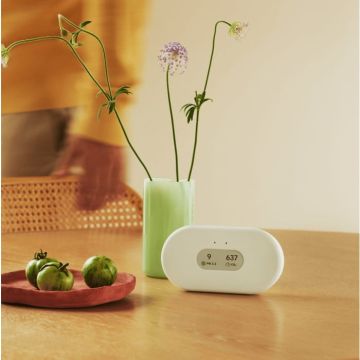
The Airthings View Plus tracks humidity alongside radon, particulate matter, CO₂, and VOCs, and will notify you when conditions drift into the range where mold becomes likely. If you’re concerned about dampness and radon in your basement, the Airthings Corentium Home 2 will continuously monitor temperature, humidity, and radon.
If you to better understand humidity and how it affects your home, read our guide: What is indoor humidity? How moisture levels can affect your home and your health.
Frequently Asked Questions (FAQ)
What humidity level stops mold growing?
Keep indoor relative humidity below 60%, and ideally between 30% and 50%. Mold needs sustained moisture, so how long humidity stays high matters as much as how high it gets.
Can you ever remove all mold spores from a house?
No, and you don’t need to. Mold spores are present in every home and cannot be eliminated. Spores only become a problem when they have enough moisture to grow, which is why humidity control — not spore removal — is the effective approach.
Is black mold more dangerous than other mold?
Health authorities do not treat so-called black mold (Stachybotrys chartarum) as a uniquely hazardous species, and the more dramatic claims about it are not well supported by evidence. All indoor mold should be removed and the underlying moisture fixed, regardless of color or species.
Do I need to get mold tested to know what species it is?
Usually not. Identifying the species rarely changes the response, which is the same either way: remove the growth and fix the moisture causing it.
Why does mold keep coming back in the same spot?
Because the moisture source was never fixed. Cleaning or painting over mold treats the symptom. Look for a leak, failed sealant, a cold uninsulated surface, blocked ventilation, or furniture trapping still air against an exterior wall.
Can an air purifier fix a mold problem?
No. A HEPA purifier can capture some airborne spores, but it does nothing about the moisture that lets mold grow, so the growth continues. Fix the damp first.
How much mold can I clean myself?
As a rough guide, patches under about 10 square feet are a reasonable DIY job with gloves, eye protection, a mask and good ventilation. Larger areas, water damage from contaminated water, or mold inside cavities and insulation warrant a professional.
Does mold cause asthma?
Damp and moldy homes are consistently associated with worsening asthma symptoms and more frequent attacks, and with allergic responses like sneezing and itchy eyes. Mold also increases the risk of developing asthma in childhood by up to 53%, according to one study: Childhood asthma and mould in homes — a meta-analysis.
Why is there mold behind my wardrobe?
Furniture against an exterior wall blocks air movement and keeps that surface colder than the rest of the room. Warm indoor air condenses against the cold surface, and the still air stops it from drying out. Pull furniture a few inches away from the wall.
Can a monitor detect mold?
Not directly; there is no consumer sensor that detects mold itself. What a monitor can do is track the humidity and temperature conditions that mold needs, which is more actionable, because it warns you before growth starts rather than after it’s visible.
Sources
- US EPA (Mold and health)
- US EPA (A brief guide to mold, moisture and your home)
- US EPA (Mold cleanup in your home)
- US CDC / NIOSH (Mold testing and remediation)
- US CDC / NIOSH (Mold health problems)
- Indoor Air (Public health and economic impact of dampness and mold)
- Childhood asthma and mould in homes — a meta-analysis

-
 September 11, 2026| Posted in Contaminants| Annabel Robertson| 3056
What is pollen? Learn how it enters your home and what you can do about it