What is pollen? Learn how it enters your home and what you can do about it
TL;DR: Pollen is a fine powder released by trees, grasses, and weeds to enable them to reproduce. For people with allergies, pollen will trigger sneezing, congestion and itchy eyes. It’s an outdoor allergen that creates an indoor problem: pollen travels inside through open windows and doors, and on clothes, hair, shoes, and pets, then settles into carpets and soft furnishings, meaning you’ll suffer symptoms even once indoors. Different plants release pollen at different times of the year, so symptoms will vary according to what type of pollen you’re allergic to. Consumer air quality monitor can't measure pollen directly, as pollen grains are much larger than the fine particles a PM2.5 sensor detects. However, some simple steps can reduce the amount of pollen inside your home. Controlling humidity can also help to ease symptoms; damp conditions can result in dust mites and mold, which can exacerbate allergy symptoms.
What is pollen?
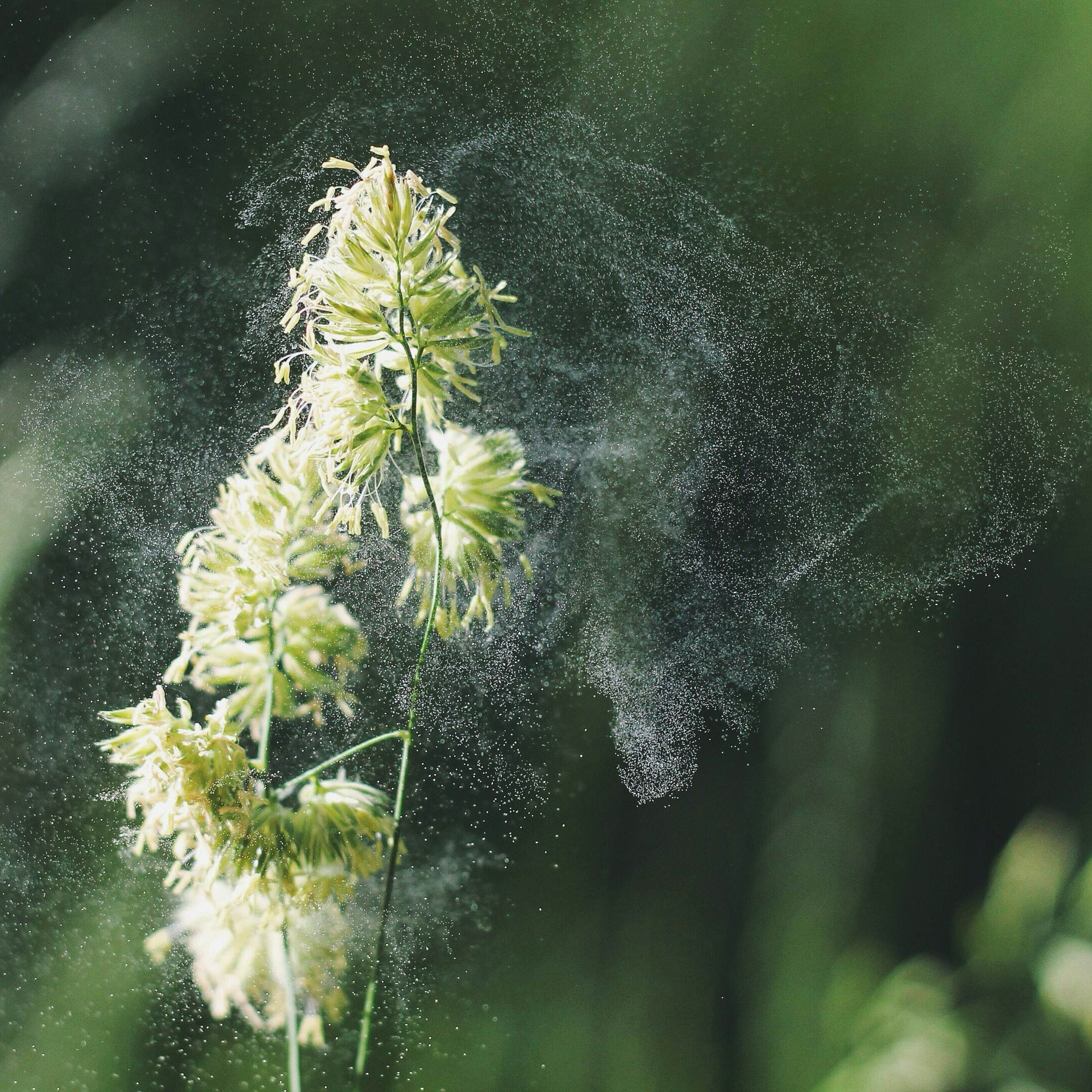
Pollen is the fine, powdery material plants release to fertilize other plants of the same species. The grains are microscopic, light, and, in many species, built specifically to travel long distances on the wind, which is what makes them very good at both getting into our homes and being inhaled.
The plants that cause most allergy problems are the wind-pollinated ones: trees, grasses and weeds. Bigger, insect-pollinated flowers are generally not a cause of pollen allergy because their pollen is heavier and stickier. Grass and birch pollen cause far more issues than, for example, a rose garden.
Why pollen causes allergic reactions
For people with a pollen allergy, the immune system misidentifies harmless pollen proteins as threats and mounts a response, releasing histamine. That response produces the familiar symptoms: sneezing, a runny or blocked nose, itchy and watering eyes, an itchy throat, and, for some people, worsening asthma. The reaction is specific to the protein, which is why someone can react badly to birch but not to grass.
How does pollen get inside my home?
Having a pollen allergy is usually something sufferers associate with being outdoors. However, people with pollen allergies often still experience symptoms indoors. Symptoms can seem especially bad first thing in the morning or in the evening. Pollen is so small that it can drift inside through open windows, ventilation systems, on your pets, shoes, hair, and clothes.
When is pollen season?
Unfortunately, “pollen season” doesn’t last for one month of the year. Different pollens are present at different times, many of which overlap, and what you react to will depend on what you’re allergic to. Taking the US as an example:
- Tree pollen season runs from late February until May, peaking in March and April.
- Grass pollen season happens in late spring and summer. This affects the largest number of people.
- Weed pollen is most common in the later summer and early fall months.
Pollens will vary depending on where you live and the weather that year. Warm, dry, breezy days generally increase airborne count, while rain over a few days can help to clear pollen out of the air. Unfortunately, plants will continue to release pollen, so while wet weather can help reduce symptoms, it provides only brief respite.
Pollen season appears to be getting longer. Research has found that climate change means that more pollen is present in the air. Rising temperatures mean extended pollen seasons; the seasons start earlier and last longer. One study claims that by the end of the century, pollen seasons will start 40 days earlier and last 15 days longer than they do now.
There is also good evidence that pollen seasons in North America have been getting longer and pollen loads heavier over recent decades, in line with rising temperatures, meaning it’s likely you’re experiencing a longer period of allergy symptoms now compared to when you were a child.
How does pollen get into your home?
- Open windows and doors, particularly on warm, breezy days
- On you, hair, skin, clothing and shoes can all carry a surprising amount indoors
- On pets, whose coats are extremely efficient pollen collectors
- Through ventilation systems without adequate filtration
- On laundry dried outdoors, which can collect pollen all day and then bring it into your living room or bedroom
Once inside, pollen settles into carpet, rugs, bedding, curtains, and upholstery. It is stirred back into the air whenever you walk across the room, sit down, or make the bed. This is why indoor symptoms often seem worse in the evening or first thing in the morning.
How to reduce pollen indoors
Try to stop it coming inside in the first place
- Keep windows closed on days when the pollen count is high, especially mid-morning to early evening when it tends to be highest.
- Dry laundry indoors during pollen season if possible.
- Change clothes and shower after spending time outside. Wash hair before bed, as it can help avoid pollen buildup on your pillow.
- Wipe pets’ coats and paws down when they come in.
Deal with what’s already inside
- HEPA filtration helps reduce pollen indoors. Pollen is a relatively large particle, which is exactly what HEPA-filter purifiers remove well. Run air purifiers in your bedroom and where you spend the most time.
- Vacuum as often as possible with a HEPA-filtered machine, and damp-dust rather than dry-dusting, which just relaunches particles.
- Wash bedding weekly in hot water during pollen season.
- Reduce soft furnishings in the bedroom if symptoms are severe; this gives pollen fewer things to settle on.
Control humidity
- Keep relative humidity in the 30–50% band. This doesn’t directly affect pollen, but dust mites and mold thrive in damp air and commonly co-trigger with pollen allergy. People often assume a bad allergy reaction is “just pollen” when it could, in part, be caused by mold or dust mites.
Can an indoor air quality monitor detect pollen?
No; however, air quality monitors can detect fine particles in the air in your bedroom or living room.
Pollen grains are relatively large (tens of microns in diameter). Consumer-grade particle sensors are built around PM2.5, meaning particles under 2.5 microns. A PM2.5 sensor doesn’t measure pollen, and any product that implies otherwise is probably overstating its capabilities. For airborne pollen counts, local forecasts based on actual pollen sampling are the best source of information.
The Airthings app’s Insights feature includes a pollen forecast, so you can check likely pollen levels where you live.
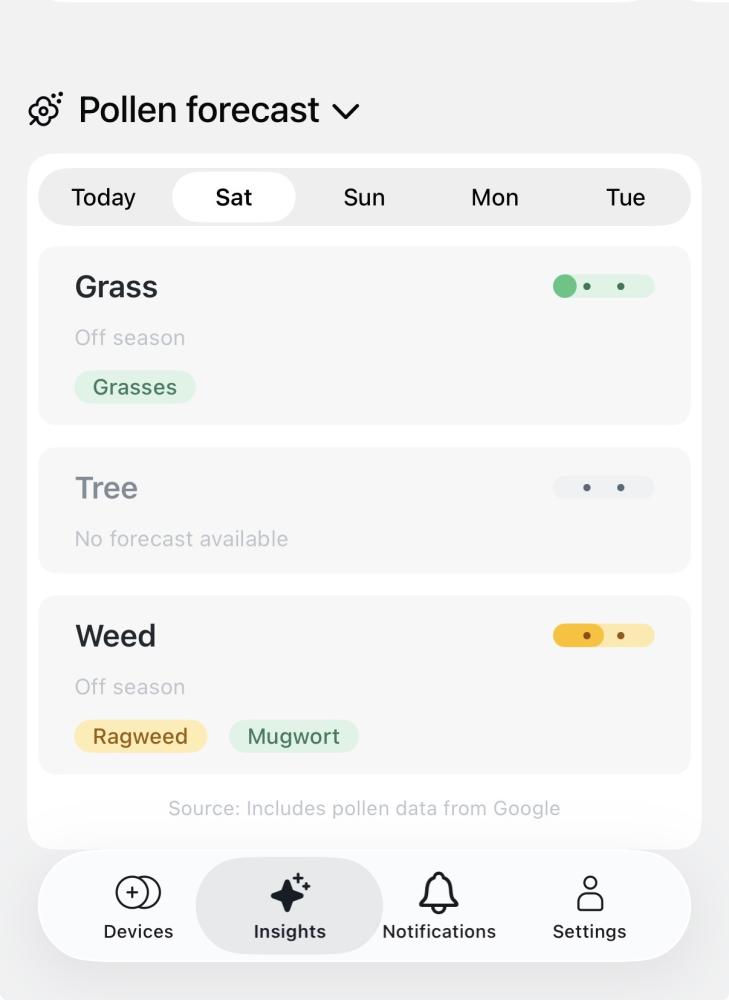
Indoor air quality monitors are, however, useful for helping to manage your bedroom or living room environment around your allergy:
- Humidity, maintain optimum humidity levels (between 30% and 50%) to remove the risk of mold and dust mite development and avoid those exacerbating your symptoms
- Particulate matter (PM2.5), understanding what causes fine particles indoors to spike or reduce when you open windows, vacuum, or run a purifier. Monitoring PM2.5 is useful for working out whether your filtration is doing anything
- Tracking air over time, which helps separate an outdoor pollen problem from an indoor air issue that you might be blaming on allergies but which could be related to something else inside your home
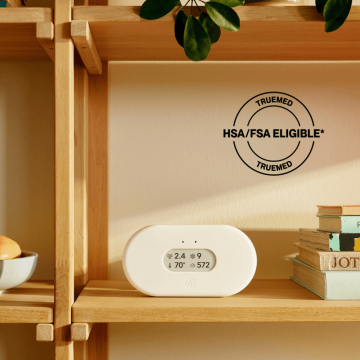
The Airthings View Plus measures particulate matter and humidity alongside radon, CO₂ and VOCs. For the wider picture on the particles it measures, see our guide to particulate matter, and for the damp side of the problem, read more in our guide to indoor humidity.
Frequently Asked Questions (FAQ)
Can an air quality monitor measure pollen?
No. Pollen grains are tens of microns across, while consumer particle sensors measure PM2.5 — particles under 2.5 microns. For airborne pollen counts, use a local pollen forecast based on real sampling.
Why are my allergy symptoms worse indoors?
Because pollen comes inside with you — on clothes, hair, shoes and pets — and settles into carpet, bedding and upholstery, where movement stirs it back into the air. That’s also why symptoms often peak in the evening or on waking.
What time of day is pollen worst?
Counts commonly peak from mid-morning through early evening, though this varies by plant and weather. Early morning and the period during steady rain are usually better for opening windows.
Does rain reduce pollen?
Sustained rain washes pollen out of the air and generally brings counts down. The period straight after rain can be worse, as plants release again and warm, drying conditions lift grains back into the air.
Do HEPA air purifiers work for pollen?
Yes — better than for most things. Pollen is a relatively large particle, which is what HEPA filtration handles well. This is quite different from gases like VOCs, which HEPA filters don’t remove.
Which plants cause the most allergies?
Wind-pollinated trees, grasses and weeds — grass and ragweed affect the most people. Showy insect-pollinated flowers are rarely the cause, because their pollen is heavier and doesn’t travel far on the air.
Are pollen seasons getting longer?
Evidence indicates pollen seasons across North America have lengthened and pollen loads increased over recent decades, associated with rising temperatures.
Should I close my windows during pollen season?
During peak hours on high-count days, yes, particularly in the bedroom overnight. You still need ventilation for CO₂ and humidity, so aim to air the house at lower-pollen times such as early morning or after rain.
Does humidity affect pollen allergy?
Not pollen itself, but damp air encourages dust mites and mold, which frequently co-trigger with pollen allergy. Keeping humidity in the 30–50% band removes part of the total load on your immune system.
Is it pollen or dust mites?
Pollen allergy tends to be seasonal and worse after time outdoors; dust mite allergy is typically year-round and worst in the bedroom on waking. Symptoms that persist through winter point away from pollen. Allergy testing gives a definitive answer.

-
 September 11, 2026| Posted in Contaminants| Annabel Robertson| 4097
What is mold? Learn why it grows inside homes, and how to stop it from coming back