How to choose the best radon detector for your home (kits vs monitors)
TL;DR: There are three types of radon detector: short-term test kits (usually charcoal canisters, 2–7 days), long-term test kits (alpha track detectors, 90–365 days), and continuous digital monitors. Short-term kits are a quick, cheap way to check whether radon is present, for example during a home sale. Long-term kits give a better estimate of your average exposure. Both are single-use and must be mailed to a lab. Continuous digital monitors cost more upfront but can be used for years, show results without a lab, and tell you whether a fix has worked. Because radon levels change with the weather, the season, and how you use your home, your health risk depends on your long-term average, which a single test can’t show you.
Why do I need a radon detector?
Radon is the leading cause of lung cancer among non-smokers and the second leading cause overall. It’s an odorless and colorless gas, making it impossible to detect without a test or monitor. Long-term exposure to high levels of radon gas is linked to lung cancer. The EPA estimates that around 21,000 people in the US die of radon-related lung cancer each year.
Learn all about radon in our guide: What is radon?
Deciding to test for radon is a smart, sensible choice for any homeowner. However, knowing exactly what kind of detector to buy can feel overwhelming. This guide compares the different types of radon detector, what to look for, and which is right for your home.
Radon detectors compared: test kits vs. digital monitors
| Short-term test kit | Long-term test kit | Continuous digital monitor | |
|---|---|---|---|
| How it works | Charcoal canister exposed to air, then mailed to a lab | Alpha track film records radon decay, then mailed to a lab | Electronic sensor measures continuously; results on the device or in an app |
| Test length | At least 48 hours | 90–365 days | Ongoing, for weeks, months, or years |
| Typical cost | $15–$50 per test | $25–$75 per test | $100–$300, one-off |
| Reusable? | No | No | Yes |
| Shows changes over time? | No, one result | No, one average | Yes, daily, weekly, and long-term |
| Best for | A quick check, such as a home sale | A one-off estimate of your average | Knowing your real average and checking that a fix keeps working |
What types of radon detector can I buy?
Radon tests vary in how long they can be used and how you get hold of the data.
Short-term “passive” radon tests
Short-term radon tests give a snapshot of your home’s radon levels. They’re ideal if you need a fast read-out, for example, if you’re buying or selling a home. They’re cheap and available at most hardware stores, and some government schemes give them out for free.
Most short-term passive tests are charcoal tests: inexpensive and easy to set up. You expose the test to air for a few days, then mail it to a lab for results. Choose an EPA-approved test.
Short-term tests are affordable and simple to use (typically $15–$50). But because they’re short-term, they won’t reflect your home’s year-round exposure: levels fluctuate with weather, season, and ventilation. You’ll also need to wait for results after mailing the test in.
Good for: a fast, cheap answer to whether radon is present at all.
Not so good for: representing your normal exposure. You get one reading from one period and location, and if conditions during that window weren’t typical — mild weather, open windows, or a rainstorm — the reading won’t reflect your average. Testing again means buying another kit.
Long-term radon tests (90–365 days)
Long-term tests, usually alpha track detectors, use a special film to record alpha particles from radon decay. They run for a minimum of 90 days, up to a full year, and many homeowners test for a full year to capture seasonal variation. These tests give a more accurate picture of your home’s average radon exposure, which is crucial when deciding whether you need to mitigate. They cost between $25–$75. Like short-term tests, they can’t be reused: testing a new location, or comparing periods, means buying another kit and waiting out the full collection window again.
Good for: a more accurate picture of average exposure, still affordable and easy to use.
Not so good for: a quick answer. You’ll wait the full 90 to 365 days, then send it to a lab and wait again. You can only measure one location at a time, and you won’t see fluctuations, which is how you’d know whether an intervention like opening windows or sealing floor cracks is actually working. Accuracy at lower radon levels is also reduced.
Continuous digital monitors
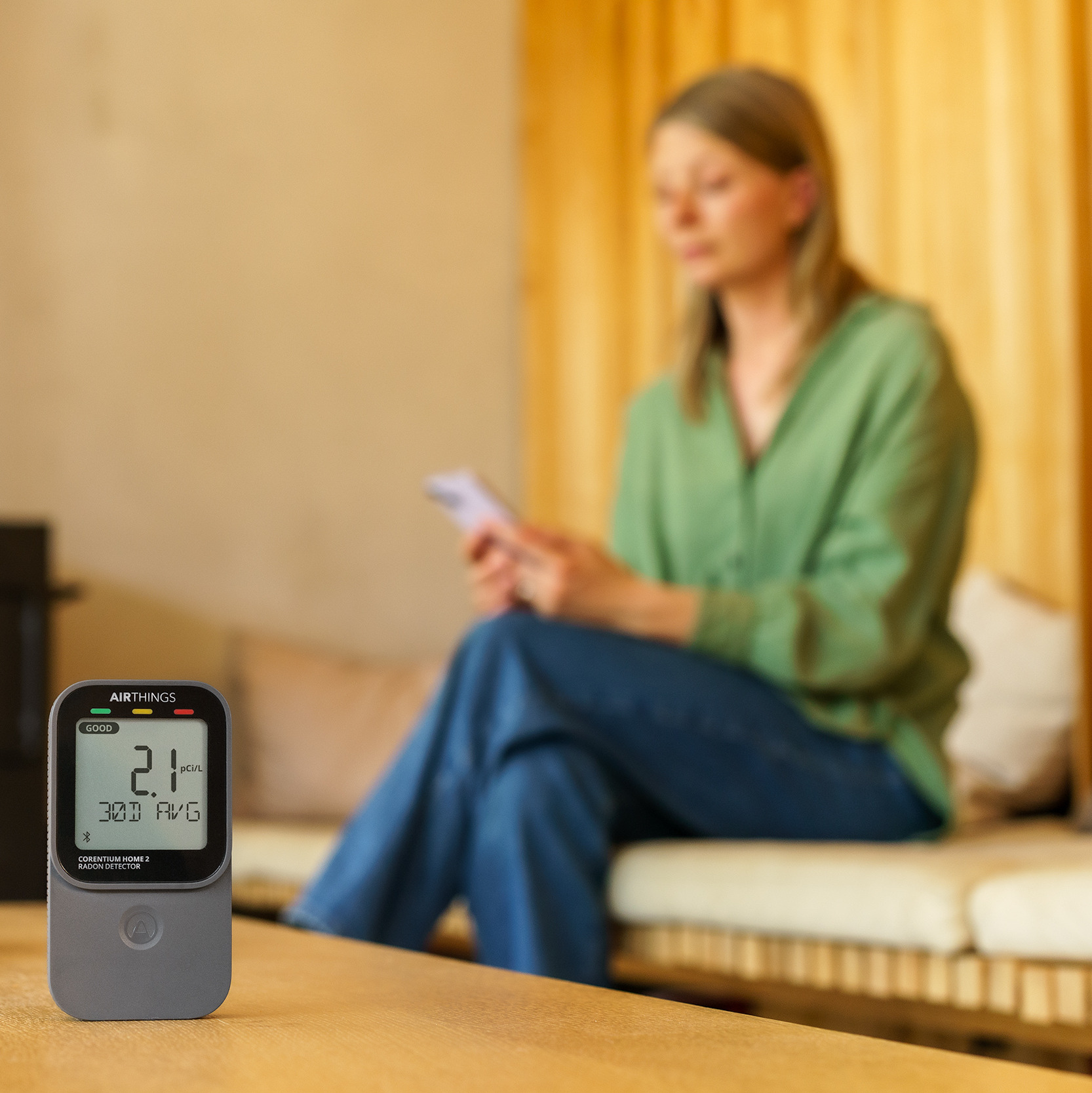
Continuous digital detectors, or monitors, can be battery-powered or plugged into a mains source. They track results over time, often with a digital display showing real-time and historical readings. Unlike passive charcoal or alpha track detectors, they don’t require lab analysis. They can monitor over weeks, months, or years, building a reliable picture of your home’s average radon level. Costs vary between $100–$300.
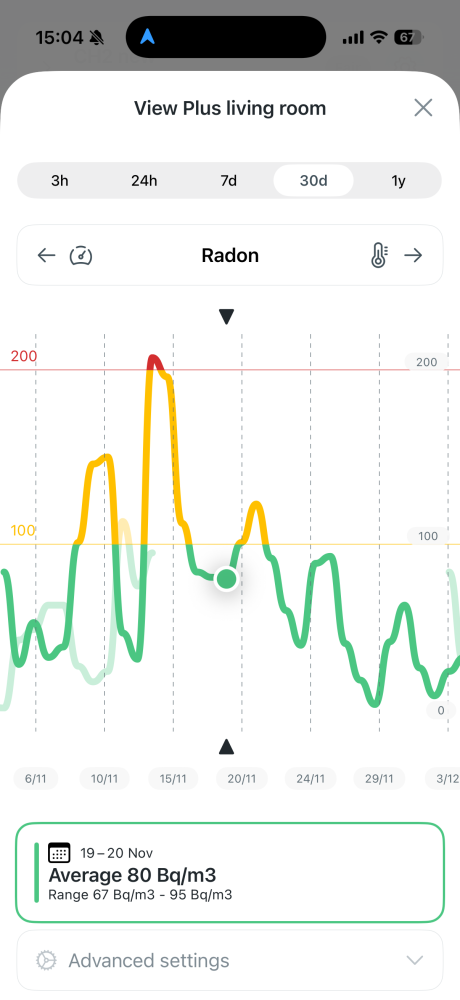
Good for: understanding your average exposure. Radon levels rise and fall daily, changing with weather and air pressure, and are typically much higher in winter when homes are sealed and heated. A continuous monitor builds the long-run average your health risk actually depends on, and keeps showing whether any mitigation efforts you’ve made have worked.
Not so good for: higher upfront cost. Some digital monitors need several days to gather data before giving a reliable average, and mains-powered models limit where you can test.
Which should you buy?
If you only need a quick check, such as for a property sale, a short-term charcoal test kit is a sensible, inexpensive choice. A continuous monitor is the better choice if an initial test showed high levels, you live in a known radon area, you spend time in a basement or ground-floor room, or you’re planning to mitigate and want to see whether it worked. Otherwise, you may end up buying repeat kits and still not know your annual average, or waiting months to find out whether your mitigation worked.
Know your real radon level, all year round
Airthings continuous radon monitors show daily, weekly, and long-term averages, with no lab and no waiting, and keep working long after a test kit is used up.
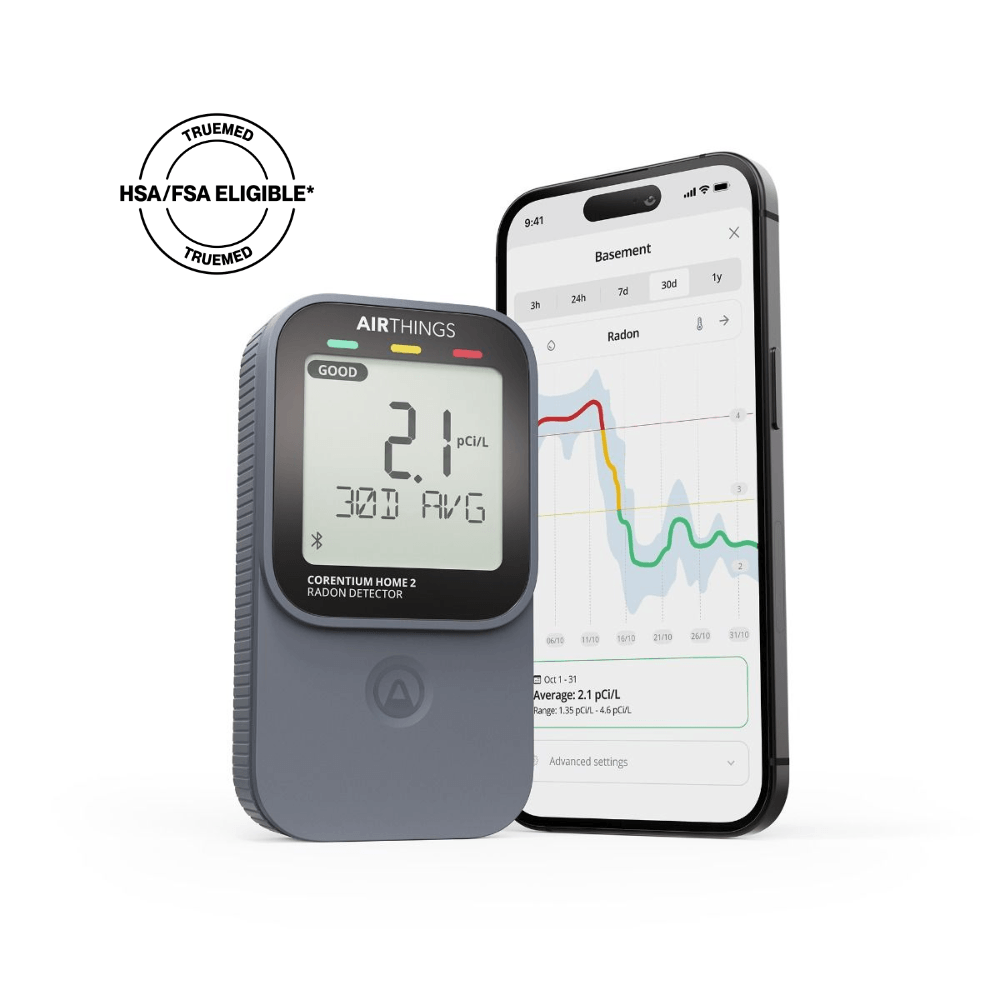
Corentium Home 2
Battery-powered radon monitor with an on-device display and app, plus temperature and humidity. Ideal for basements.
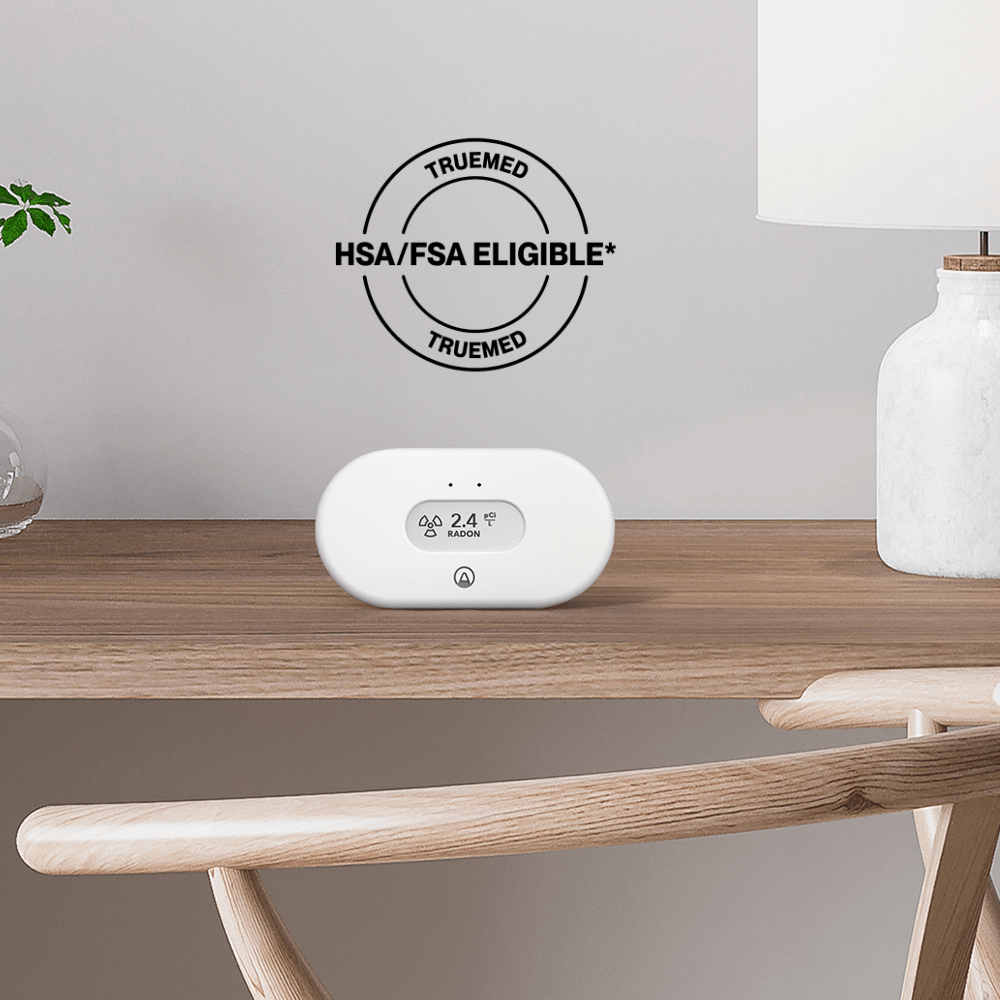
View Radon
Smart radon monitor for the basement or ground floor, with remote access to your readings.
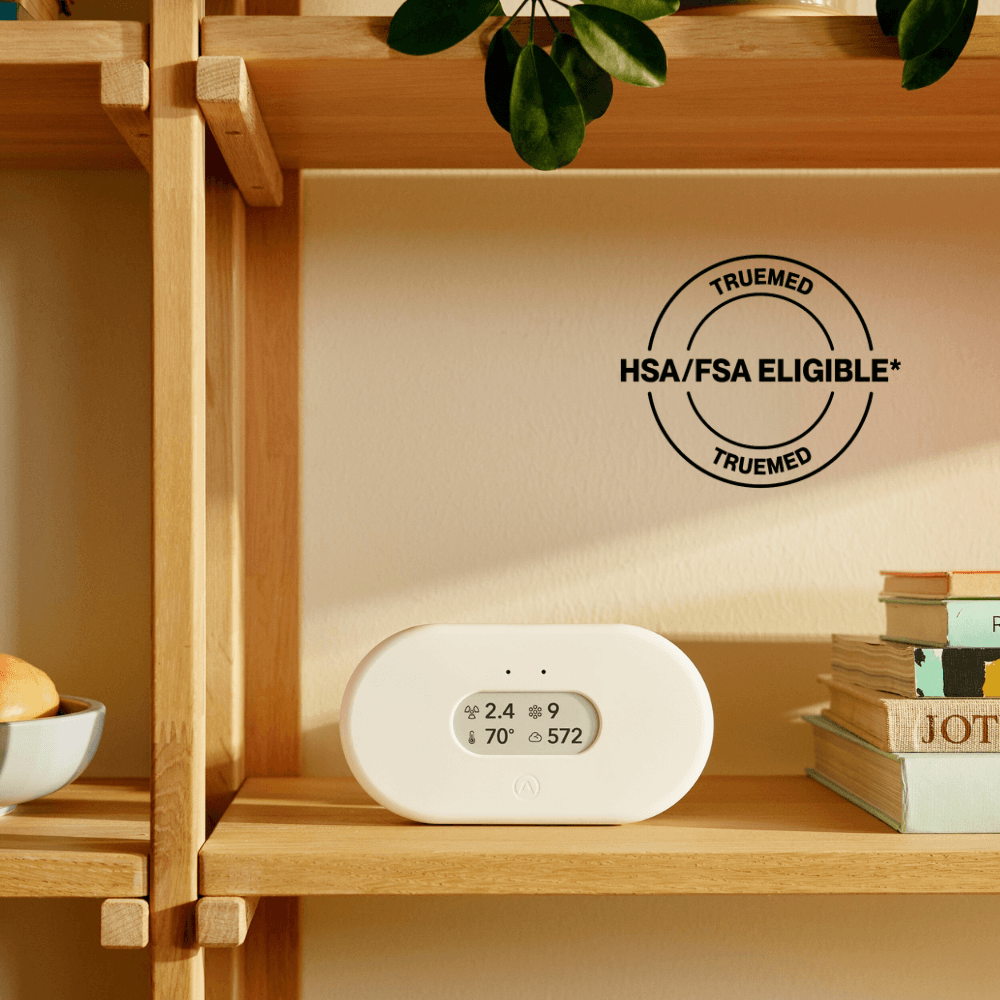
View Plus
Radon plus PM2.5, CO₂, VOCs, humidity, and temperature, for complete air quality in your main living space.
What should I know when comparing radon detectors?
1. Continuous measurement versus a single reading
The most important thing to understand is that if you take only one reading, it’s just a single “snapshot” rather than an average of fluctuating readings. Test kits are also single-use, so if you want to check radon somewhere else in your home or compare readings before and after mitigation, you will need to buy more tests.
2. How long before a reading means something
Short-term tests generally need a minimum of 48 hours, with the house kept closed up. Long-term assessment means 90 days or more. Digital monitors will show a figure quickly, but early readings carry wide uncertainty that narrows as data accumulates, so treat a first-day number as a provisional guide, not as your result. The EPA and CDC both recommend monitoring for as long as possible to determine the actual average radon level.
Be skeptical of anything that claims to provide a trustworthy radon reading in minutes. That isn’t how the measurement works.
3. Independent validation
Radon measurement is one of the few consumer categories supported by credible third-party programs. In the US, look for devices and services associated with the National Radon Proficiency Program (NRPP) or the National Radon Safety Board (NRSB). While NRPP and NRSB currently only recommend or certify professional radon testing equipment (not consumer-grade monitors), many of the companies they list also make consumer versions of their professional monitors. This is generally a good indicator that you’re buying a quality product. C-NRPP in Canada maintains a list of monitors it approves for consumer use.
4. Whether you can see history
A current reading tells you very little on its own. What’s useful is reviewing trends over time, spotting whether levels are climbing as winter sets in, whether they spike overnight, and whether they drop back down after you fitted a radon fan.
5. Power and placement
Radon is most likely to affect the lower parts of your home, so test the basement if you use it regularly or have any lower-level bedrooms or a home office there. Battery devices can be placed anywhere, whereas mains-only devices need a socket, which might limit where you can place them. If you want to move a device between rooms, battery power is worth more than it sounds.
6. Whether it does anything else
Some monitors measure radon only; others add CO₂, particulate matter, VOCs and humidity. If you’re specifically solving for radon, a radon-only device is a perfectly good purchase. If you’re likely to care about ventilation, damp or air quality generally, a multi-sensor monitor avoids buying twice.
Which Airthings radon monitor is best for me?
Airthings makes continuous digital radon monitors for different rooms and needs:
| Monitor | What it measures | Best for | Price |
|---|---|---|---|
| Corentium Home | Radon | Simple radon monitoring in a basement or ground floor | $149.99 |
| Corentium Home 2 | Radon, temperature, humidity | Basements; battery-powered, with an app for history and Radon Insights | $179.99 |
| View Radon | Radon | Basement or ground floor, with remote access to readings | $219.99 |
| Wave Plus | Radon plus CO₂ and other air quality factors | Bedrooms and home offices on lower floors | $249.99 |
| View Plus | Radon, PM2.5, PM1, CO₂, VOCs, humidity, temperature | Complete air quality in your main living space | $329.99 |
Want radon in the basement and full air quality upstairs? The Living Room + Basement bundle pairs View Radon with View Plus.
If you’re weighing a specific Airthings monitor against another brand you’re already considering, our product comparisons set out the specifications side by side, for example Corentium Home 2 vs Aranet Radon Plus and Corentium Home 2 vs EcoSense EcoQube Flex.
What to do once you have a reading
If your long-term average (ideally 90 days or longer) sits at or above 4.0 pCi/L (150 Bq/m³), the EPA recommends fixing your home. Between 2.0 and 4.0 pCi/L (75–150 Bq/m³), the EPA recommends considering it. In Canada, Health Canada recommends action above 200 Bq/m³. There is no level of radon considered entirely safe, so lower is always better. See the full radon levels chart.
Next steps you can take:
- Read what radon is and why it matters if you want to know more about radon and where it comes from
- How to test for radon guides you through getting started with radon testing.
- DIY radon mitigation covers what you can do yourself, and what a professional will install
- Radon mitigation costs explains likely costs involved
If you do mitigate for radon, it’s super important to keep measuring afterward. Mitigation systems can fail, and radon levels can change again if the soil beneath your home shifts, so it’s best to monitor continuously.
Frequently Asked Questions (FAQ)
What is the best radon detector for a home?
For most homes, a continuous digital radon monitor is the best choice, because it shows your long-term average and keeps working after you’ve fixed a problem. Choose a radon-only monitor such as Corentium Home 2 for a basement, or a multi-sensor monitor such as View Plus if you also want to track air quality in your main living space. A short-term test kit is fine if you only need a quick, one-off check.
What’s the difference between a radon test kit and a radon monitor?
A test kit is used once over a fixed period and then mailed to a lab for analysis. A digital monitor continuously measures and displays results on the device or in an app indefinitely. Kits answer “Do I have a problem?”; monitors answer “What is my actual long-term exposure, and did my fix work?”
How long does a radon test need to run?
Short-term tests need a minimum of 48 hours with the house closed up. A long-term assessment means 90 days or more. Digital monitors display a figure sooner, but early readings carry wide uncertainty and should be treated as provisional.
Are cheap radon test kits accurate?
A reputable lab-analyzed kit can give a reliable result for the period it measures. The results are accurate for that period of time tested, however, they can’t give you a broader picture of the average radon exposure.
What radon level requires action?
In the US, the EPA recommends fixing your home at or above 4.0 pCi/L (150 Bq/m³), and considering it between 2.0 and 4.0 pCi/L. No level of radon is considered entirely safe, and you should try to reduce radon as much as possible.
Where should I put a radon detector?
In the lowest level of the home that people actually use, in a room that’s genuinely occupied, such as a ground-floor or basement bedroom, living room, or home office, rather than an unused cellar. Keep it away from drafts, exterior doors, air vents, windows, and off the floor.
Do I need to test more than one room?
Levels vary between rooms and floors, so a single reading can’t tell you if there is radon across your home. Prioritize the lowest occupied level and bedrooms, since that’s where people spend the most consecutive hours. If radon is very high at ground level then it’s worth testing at a level above, just to be sure it’s not causing a problem on upper floors.
Does radon change with the seasons?
Yes, levels are typically higher in winter, when homes are sealed and heated, which draws air in from the ground. A lack of ventilation means radon can build up indoors. This is the main reason a single summer test will not give a representative picture of your home’s average radon exposure.
How do I choose a reliable radon detector?
Check for independent, third-party reviews from reputable media and also from customers. There currently are no industry-approved consumer-grade monitors in the US, but several companies that make a “Pro” device for radon professionals and home inspectors also make consumer monitors. A consumer monitor from these brands is likely to be high quality and equipped with an accurate, reliable radon sensor.
pCi/L or Bq/m³ — which should I use?
Use whichever your national guidance uses, so you can compare your reading directly to the action level. The US uses pCi/L with a 4.0 action level; most other countries use Bq/m³. 1 pCi/L equals 37 Bq/m³.
Can one device measure radon and other air quality factors?
Yes, some monitors combine radon with CO₂, particulate matter, VOCs and humidity. A radon-only device is fine if radon is your only concern, but a combined monitor avoids a second purchase if you later care about ventilation or dampness.
Do I still need to measure after installing a mitigation system?
Yes. Systems can fail over time, and a fan might stop without anyone noticing. Shifts in the soil under your home might mean radon levels change and more enters your home. Continuous monitoring is how you confirm a system is still working rather than assuming it is.

-
 September 1, 2026| Posted in Guides| Annabel Robertson| 1193
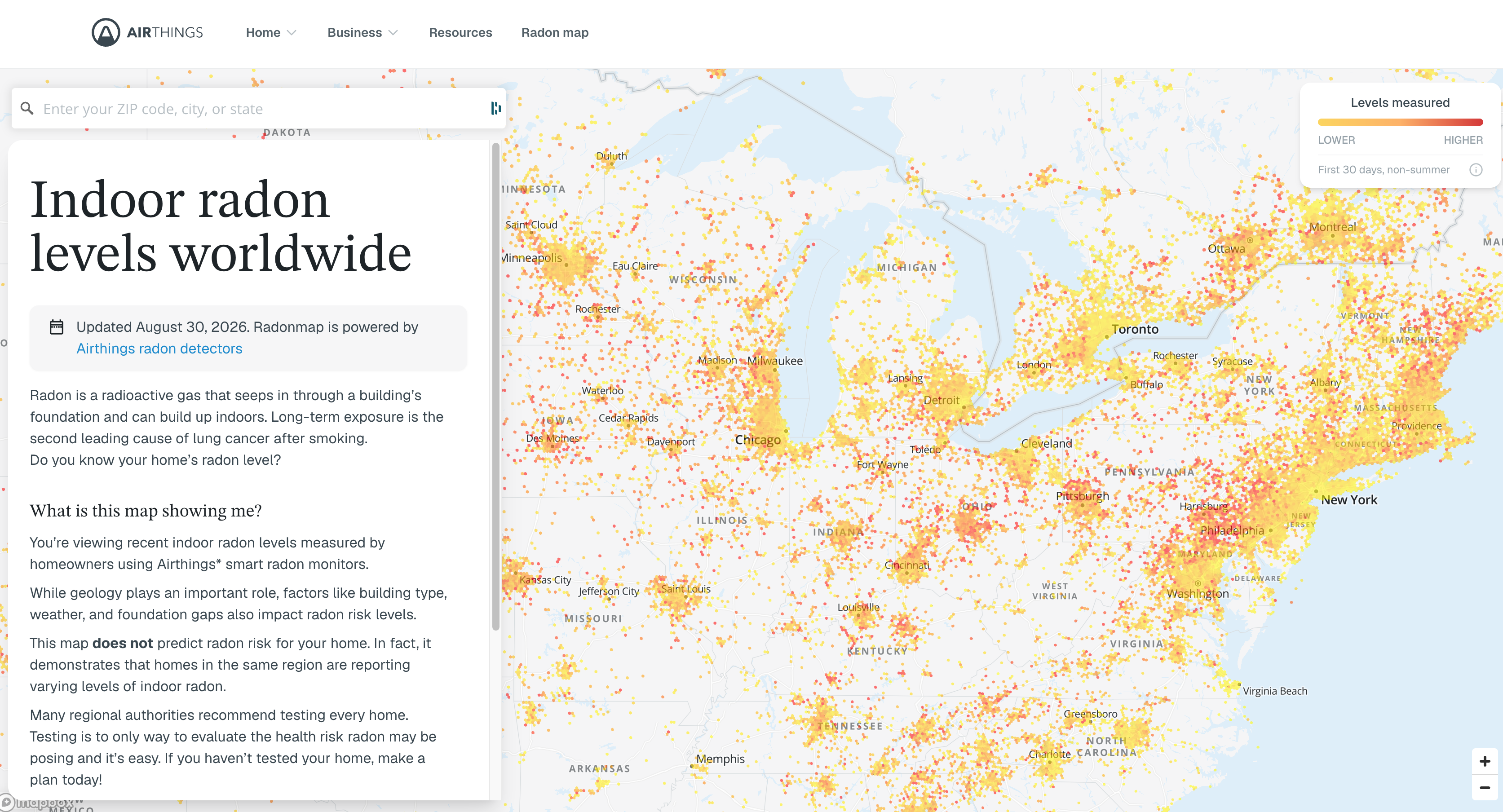
Radon Map USA & Canada: Radon Levels Near You