
How do I reduce VOCs in my home?
TL;DR: VOCs, or volatile organic compounds, are a group of airborne chemicals released by everyday activities and materials. New furniture, fresh paint, varnishes, flooring, cleaning products and cooking are all sources. Because modern US homes are built to be highly airtight with little natural ventilation, VOC levels indoors can rise above the “safe” threshold of 2,000 ppb. Exposure to VOCs can cause a number of acute (short term) and chronic (long term) symptoms, from nausea, headaches, and eye and throat irritation, to organ damage and cancer. Monitoring your indoor air quality is the best way to manage VOCs, with increasing ventilation and changing habits among the best ways to keep levels safe and your home healthy.
To reduce VOCs in your home effectively, it takes a combination of increasing ventilation, choosing low-VOC products, and monitoring your indoor air quality to understand if you actually have a VOC problem. Often, simply increasing natural or mechanical ventilation can bring levels back down again. In this guide, we will explore what might be causing high VOC levels in your home, and what to do to reduce them.
What exactly are VOCs?
VOCs, or volatile organic compounds, are a group of airborne chemicals released by everyday activities. We all know the distinct scent of a freshly painted room, a new mattress, or the burst of fragrance from a plug-in air freshener. While we have been conditioned to associate these smells with “cleanliness” or “newness,” what you are actually smelling is chemical off-gassing.
Read our guide on what VOCs are and how to measure them.
Because modern US homes are built to be highly airtight with little natural ventilation, these gases become trapped indoors. The US Environmental Protection Agency (EPA) reports that concentrations of many VOCs are consistently higher indoors — up to ten times higher — than outdoors. One US state source lists VOCs that may be present in our daily lives as: benzene, ethylene glycol, formaldehyde, methylene chloride, tetrachloroethylene, toluene, xylene, and 1,3-butadiene.
Whether you are dealing with unexplained headaches, worsening allergies, or simply want to create a toxin-free environment for your family, here is your practical playbook for finding and eliminating VOCs in your home.
What are VOCs, and where do they come from?
VOCs are a massive group of carbon-based chemicals that easily evaporate into the air at room temperature. While some VOCs are naturally occurring, the most dangerous ones in our homes are human-made chemicals used to manufacture and maintain building materials, interior furnishings, and cleaning products. The EPA’s Total Exposure Assessment Methodology (TEAM) studies found levels of about a dozen common organic pollutants to be two to five times higher inside homes than outside, regardless of whether the homes were in rural or highly industrial areas.
The most common hidden sources of VOCs in your home include:
- Paints, varnishes, and solvents: The classic culprits. Even after paint dries, it can continue to release VOCs into the air for months.
- New furniture and flooring: Pressed wood products (like MDF or particleboard used in flat-pack furniture), new carpets, and vinyl flooring are notorious for off-gassing formaldehyde, a highly toxic VOC.
- Cleaning supplies: Aerosol sprays, bleach-based cleaners, glass cleaners, fabric softeners, and heavy-duty degreasers release many airborne chemicals.
- Artificial fragrances: Scented candles, plug-in air fresheners, and heavily perfumed laundry detergents do not clean your air; they mask odors by pumping VOCs into your breathing space.
- Dry cleaning: Clothes that have been dry-cleaned often retain perchloroethylene, which slowly off-gases into your closet and bedroom.
VOC levels overview
Here is how Airthings monitors, such as the View Plus, Wave Enhance, and Wave Plus, measure and indicate VOC levels:
- 0–250 ppb: “Good”: Your air is clean.
- 250–2,000 ppb: “Fair”: Levels are rising.
- Above 2,000 ppb: “High”: VOC levels are unsafe, action is required to identify the source. Ventilate immediately.
What are the health impacts of VOCs?
Health impacts depend on the levels of VOCs you are exposed to, the length of time, and personal sensitivity. Children, the elderly, and those with asthma and other respiratory conditions are particularly vulnerable. Studies from the US Centers for Disease Control and Prevention (CDC) show that the home environment is responsible for 66% to 78% of an individual’s total daily exposure to airborne VOCs.
Short-term exposure (acute):
Breathing in high levels of VOCs, such as when painting a room or using a harsh bathroom cleaner, can cause immediate symptoms:
- Irritation of the eyes, nose, and throat
- Headaches and dizziness
- Nausea or a feeling of intoxication
- Worsening of asthma symptoms
Long-term exposure (chronic):
Living in a home with consistently elevated VOC levels over years is linked to much more severe health outcomes. Prolonged exposure to specific VOCs, like formaldehyde and benzene, has been linked to central nervous system damage, liver and kidney damage, and an increased risk of certain cancers.
What are the best ways to reduce VOCs in my home?
You cannot completely eliminate every single VOC, but you can drastically reduce your exposure by focusing on source control and smart ventilation.
1. Monitor your home’s air for VOCs
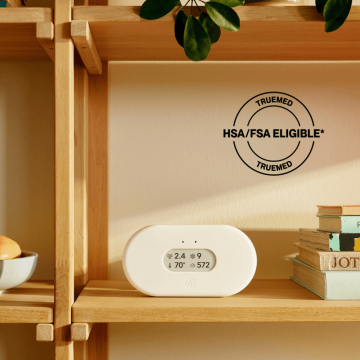
The biggest danger with VOCs is that you eventually become “nose-blind” to them, and many harmful VOCs are entirely odorless to begin with. The only way to know if your home is safe is to track your air continuously. Using a smart monitor like the Airthings View Plus or Wave Plus gives you a real-time gauge of your total VOC levels. If the baseline spikes, you know it is time to take action.
Learn more about the importance of monitoring indoor air quality in your home and how to get started in our guide: How to test the indoor air quality inside your home.
2. Make active choices and change behavior
The most effective way to reduce indoor air pollution is to stop bringing it inside in the first place.
- Buy low VOC: When renovating, always look for paints, adhesives, and sealants clearly labeled as “Low-VOC” or “Zero-VOC.”
- Air out your new furniture: If you buy a new mattress, rug, or piece of flat-pack furniture, unbox it in a well-ventilated garage or a covered patio and let it off-gas for a few days before bringing it into your bedroom.
- Ditch the artificial scents: Throw away synthetic air fresheners. If you want your home to smell good, rely on opening a window, baking real food, or using high-quality, natural essential oils (used sparingly).
- Switch to green cleaners: Replace harsh chemical aerosols with natural alternatives like white vinegar, baking soda, and mild dish soap.
3. Ventilate during any necessary projects
If you must use products that contain high VOCs, like painting a nursery, applying polyurethane to a floor, or using heavy-duty glue, ventilation is non-negotiable. Open multiple windows to create a cross-breeze, and place a box fan in the window blowing outward to actively pull the chemical fumes out of the house. Keep the room ventilated for at least 48 to 72 hours after the project is finished.
4. Use an air purifier with an activated charcoal filter
It is a common misconception that any air purifier will fix a chemical smell. Standard HEPA filters do not capture VOCs. HEPA filters are designed for physical particles (like dust and PM2.5). To capture airborne chemicals and gases, you must use an air purifier equipped with a substantial activated carbon filter, like the Airthings Renew. The porous carbon traps the gas molecules, removing them from your breathing zone.
Frequently Asked Questions (FAQ)
How long does it take for new furniture to stop off-gassing?
The heaviest off-gassing occurs within the first month after unpacking a new item. However, materials like polyurethane foam, memory foam mattresses, and pressed wood can continue to emit low levels of VOCs after this initial airing out. Continuous ventilation during the first few weeks is critical.
What are the biggest sources of VOCs indoors?
Common indoor sources of VOCs include paint, cleaning products, air fresheners, candles, new furniture, carpets, mattresses, building materials, and personal care products. Gas stoves, printers, and hobby supplies can also release VOCs into the air.
Do air purifiers get rid of VOCs?
Only if they have an activated carbon filter. A standard HEPA filter only removes solid particles (like PM2.5 and pollen) and will allow VOC gases to pass right through. To neutralize chemical smells, ensure your purifier utilizes an activated carbon layer.
Can opening windows reduce VOCs?
Yes. Increasing ventilation is one of the fastest and most effective ways to lower indoor VOC concentrations. Opening windows and doors helps dilute polluted indoor air with fresh outdoor air, especially after cleaning, painting, or bringing new products into the home.
Are essential oils considered VOCs?
Yes. Even natural fragrances from essential oils are technically volatile organic compounds. While they are generally less harmful than synthetic chemical fragrances, dispersing heavy amounts of essential oils into the air can still irritate the lungs of people with severe asthma or chemical sensitivities. Moderation is key.
Can I bake out the VOCs in my house?
A “bake-out” involves turning up your home’s heat to high temperatures to force building materials to release their VOCs quickly, and then aggressively venting the air outside. While sometimes used in commercial construction, the EPA does not recommend this for residential homes, as it can damage household materials and sometimes fails to permanently reduce chemical emissions. Standard, continuous ventilation is much safer and more effective.
Are VOCs harmful to children and pets?
Yes. Children, pets, older adults, and people with asthma or respiratory conditions can be more sensitive to VOC exposure. High VOC levels may cause headaches, eye irritation, dizziness, coughing, or worsen existing breathing issues.
How can I tell if my home has high VOC levels?
Strong chemical odors, frequent headaches, eye irritation, dizziness, or stale indoor air can sometimes indicate elevated VOC levels. However, many VOCs are invisible and odorless, so the most reliable way to assess exposure is with an indoor air quality monitor that measures VOC concentrations.
Do houseplants remove VOCs?
While some studies suggest certain plants can absorb small amounts of VOCs in laboratory conditions, the effect in real homes is extremely limited. Proper ventilation, source control, and air filtration are far more effective ways to reduce VOCs indoors.
Should I avoid scented candles and air fresheners?
Many scented candles, plug-ins, wax melts, and aerosol air fresheners release VOCs and other airborne chemicals into your home. It’s best to avoid them. If you must use them, try fragrance-free products and improve ventilation to help reduce unnecessary chemical exposure indoors.
Sources
- US EPA (Volatile organic compounds’ impact on indoor air quality)
- US EPA (What are volatile organic compounds?)
- US EPA (What should I know about formaldehyde and indoor air quality?)
- US EPA (Guidance on bake-out procedures)
- US National Cancer Institute (Formaldehyde)
- Minnesota Department of Health (Volatile organic compounds in your home)
- PubMed Central (Indoor sources of VOC exposure)