How much does a radon mitigation system cost? DIY vs professional
TL;DR: A professionally installed radon mitigation system in the US typically costs $1,200–$2,500, depending on your home’s foundation, size, and layout. Crawl spaces and multiple suction points push costs up. DIY steps like sealing cracks and covering a sump pit cost around $100–$300 and can help, but rarely fix high levels on their own. The EPA recommends fixing your home if your long-term radon average is at or above 4.0 pCi/L (150 Bq/m³), and recommends using a qualified contractor for active systems. Whatever you spend, keep monitoring afterwards to confirm the system is working.
A professionally installed radon mitigation system in the United States typically costs between $1,200 and $2,500. That’s a significant investment, so before you spend it, make sure your long-term average radon level is high: ideally measured over at least 90 days, at or above the EPA Action Level of 4.0 pCi/L (150 Bq/m³).
Discovering that your home has high radon levels can come as a shock. The next two questions are almost always: “How much is this going to cost me?” and “Can I just fix this myself?”
What is a radon mitigation system?
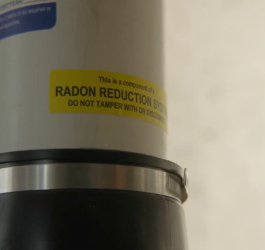
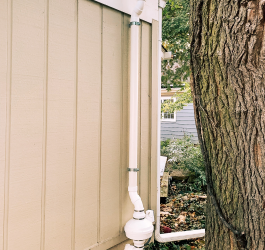
A radon mitigation system is a permanent setup that stops radon gas from building up inside your home. The most common type is Active Sub-Slab Depressurization (ASD): a PVC pipe is inserted through your basement floor or slab, and a continuously running radon fan pulls radon from the soil beneath your home and vents it safely above the roofline before it can get inside. Homes with crawl spaces may instead have the crawl space sealed with a plastic membrane and vented in a similar way.
Why do you need to mitigate for radon?
Radon is the leading cause of lung cancer in non-smokers and is responsible for about 21,000 lung cancer deaths in the US each year (source: EPA: Health risk of radon). Because radon poses such a serious health risk, high levels are worth fixing. The good news is that radon is a very solvable home health issue, and mitigation is effective and long-lasting.
Want to learn more about radon? Read our in-depth guide, What is radon? Understanding the invisible gas and safe indoor levels.
Whether you are looking to hire a certified pro or try DIY fixes to solve your radon issue, here is a guide to radon mitigation costs, methods, and results.
1. How much does a radon mitigation system cost?
A professional radon mitigation system in the US typically costs between $1,200 and $2,500. While that price tag might seem high, a professional system (Active Sub-Slab Depressurization, or ASD) is the most reliable way to bring levels above 4.0 pCi/L back down. Given that radon can cause serious health problems, it’s an investment that can bring long-term peace of mind.
| Option | Typical cost | What it does |
|---|---|---|
| Professional ASD system | $1,200–$2,500 | Permanent fix for high levels; the standard approach for basements and slabs |
| Crawl space encapsulation (add-on) | +$500–$1,500 | Seals exposed earth so radon can be drawn out from beneath the membrane |
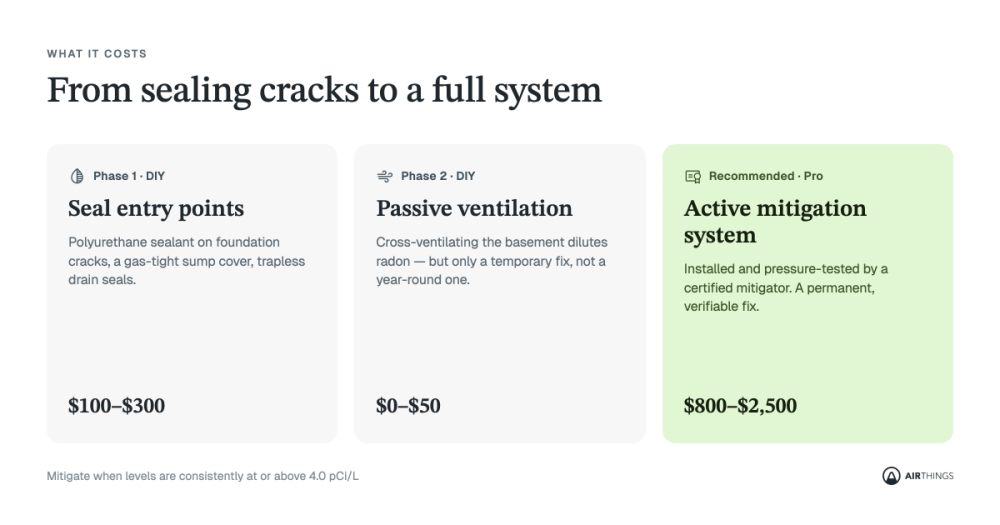
| DIY sealing (cracks, drains, pipes) | $100–$300 | Reduces radon entry points; helps, but rarely fixes high levels alone |
| Gas-tight sump pit cover | Around $100 | Closes one of the biggest radon entry points in a basement |
| Passive ventilation | $0–$50 | Temporary dilution only; not a year-round fix |
| DIY fan and pipe kit | $400–$600 | Not recommended without training (see below) |
| Continuous radon monitor | From around $150, one-off | Confirms you need to mitigate, then verifies the system keeps working |
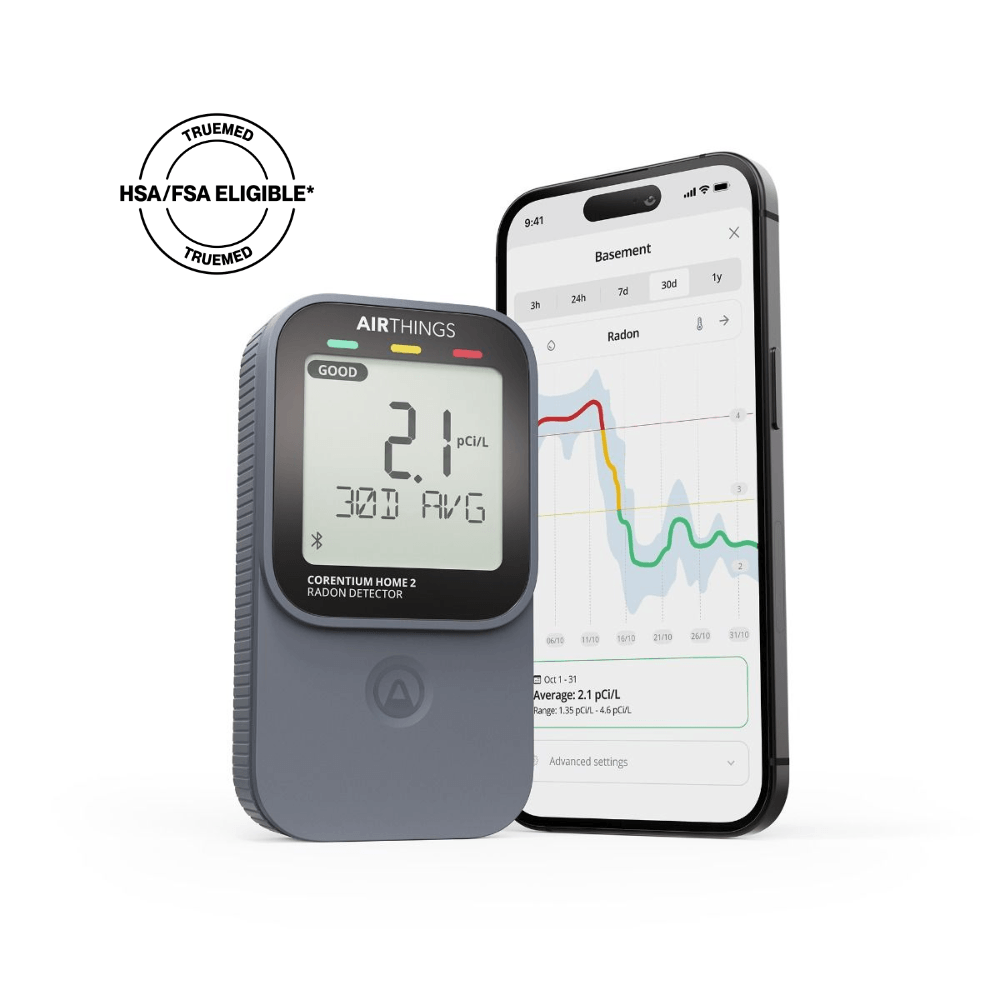
Before you spend $1,200+, know your real average. A continuous radon monitor shows your long-term level, so you mitigate only if you need to, and can prove the fix worked.
What impacts radon mitigation price?
Not every home is the same, and several variables can push your estimate toward the higher end of the scale:
- Foundation type: A simple concrete slab is the cheapest to fix. If you have a crawl space that needs to be encapsulated (sealed with plastic), expect to add $500 to $1,500 in labor and materials.
- Home size and layout: Large homes or homes with multiple “add-ons” may require two suction points instead of one to pull enough air from under the entire footprint.
- Aesthetics: Hiding the PVC vent pipes inside a closet or routing them through the attic costs more in labor than a standard exterior “fan-on-the-wall” installation.
- Local labor rates: Prices in high-cost-of-living areas (like the Northeast or West Coast) are generally higher than the national average.
The EPA recommends getting estimates from more than one qualified radon mitigation contractor so you can compare.
2. Can you fix a radon problem yourself?
If your radon levels are “borderline” (between 2.0 and 4.0 pCi/L), or if you want to try lowering your costs before calling a pro, there are several DIY steps you can take. Read our guide on DIY radon mitigation for more details.
Phase 1: Seal entry points (Cost: $100–$300)
Radon enters through cracks in building foundations and around windows or plumbing. By sealing these, you can reduce the “vacuum effect” that pulls gas from the soil, and also stop radon leaking inside.
- Foundation cracks: Use a high-quality, polyurethane-based self-leveling sealant. Do not use standard silicone; it won’t bond effectively to concrete long-term.
- Sump pump covers: An open sump pit acts like a radon chimney. You can buy a gas-tight sump cover kit for roughly $100.
- Floor drains: Install “trapless” floor drain seals that allow water out but stop soil gases from coming in.
Phase 2: Passive ventilation (Cost: $0–$50)
- The “window fix”: Opening windows in the basement creates a cross-breeze that dilutes radon.
- The warning: This is a temporary measure. It is not a sustainable solution during a US winter or peak summer, as it’ll only work if you can leave windows open, which is likely an unrealistic year-round solution.
After each step, check your radon monitor over the following days and weeks to see how much difference it has made before deciding whether you need a professional system.
3. Can you install your own radon mitigation system?
Technically, you can buy a radon fan and PVC pipe at a home improvement store for about $400–$600. However, the EPA recommends using a qualified contractor for active mitigation, and so do we, for three key reasons:
- Backdrafting risk: If a fan is installed incorrectly, it can pull carbon monoxide from your water heater or furnace into your living space, a potentially deadly mistake.
- Pressure field testing: Pros use “micromanometers” to ensure the fan is actually creating a vacuum under the entire floor. Without this, you might just be venting a small corner of your basement while the rest remains high.
- Resale value: When you sell your home, the buyer’s inspector may look for documentation or labeling from a certified mitigator. A DIY system may raise questions at inspection and could end up needing to be redone by a pro.
For help finding a professional, use the EPA’s guide to finding a certified radon mitigator in your area.
4. How do I know my radon mitigation worked?
Whether you spend $150 on DIY sealant or $2,000 on a professional system, it’s important to verify that it is working. Radon systems can fail. PVC pipes can crack, and fans eventually wear out. More importantly, radon levels fluctuate with the weather. A system that works in the summer might struggle during a heavy spring rain or a freezing winter, so continuing to monitor is essential for long-term peace of mind.
How to know your house is safe from radon? A continuous digital monitor helps you keep track of your radon levels and understand whether the steps taken to mitigate have been successful.
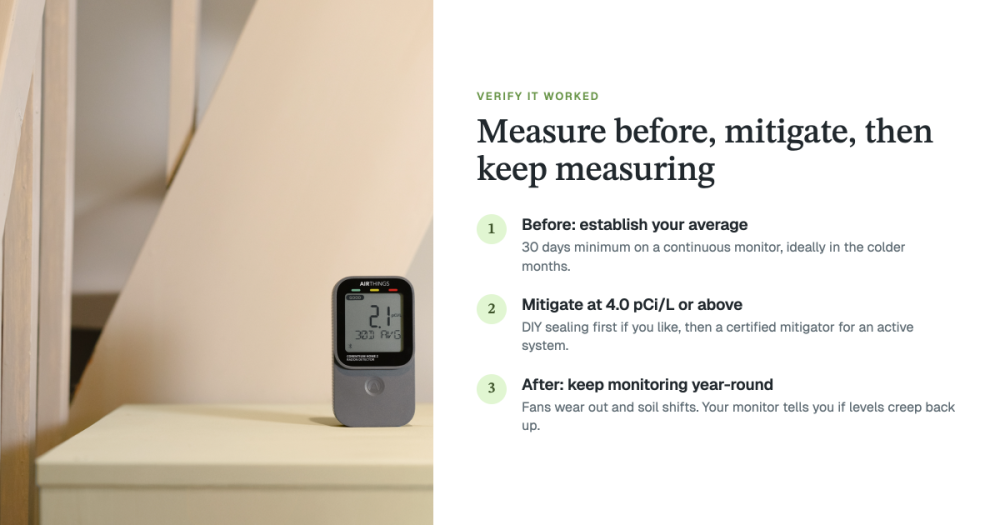
- Before mitigation: Use a continuous digital monitor to establish your home’s radon average. You will see a useful picture within the first 30 days, but the EPA’s long-term threshold is based on 90 days or more, so let it run at least that long, preferably through the colder months.
- Mitigate if your long-term average is at or above 4.0 pCi/L (150 Bq/m³).
- After mitigation: Keep monitoring to ensure your levels stay below the EPA Action Level of 4.0 pCi/L year-round. If your fan ever stops or something shifts due to changes in the soil under your home and radon starts to rise again, your monitor will show it.
Protect your investment
A mitigation system costs over $1,000. A continuous monitor confirms it worked and shows straight away if a fan fails or levels creep back up.
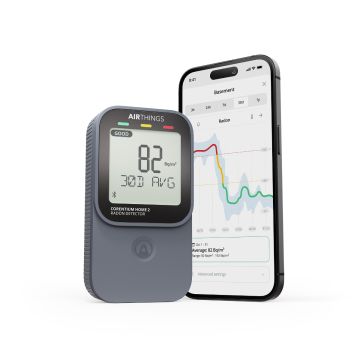
Corentium Home 2
Battery-powered radon monitor for basements, with daily, weekly, and long-term averages in the app, plus temperature and humidity.
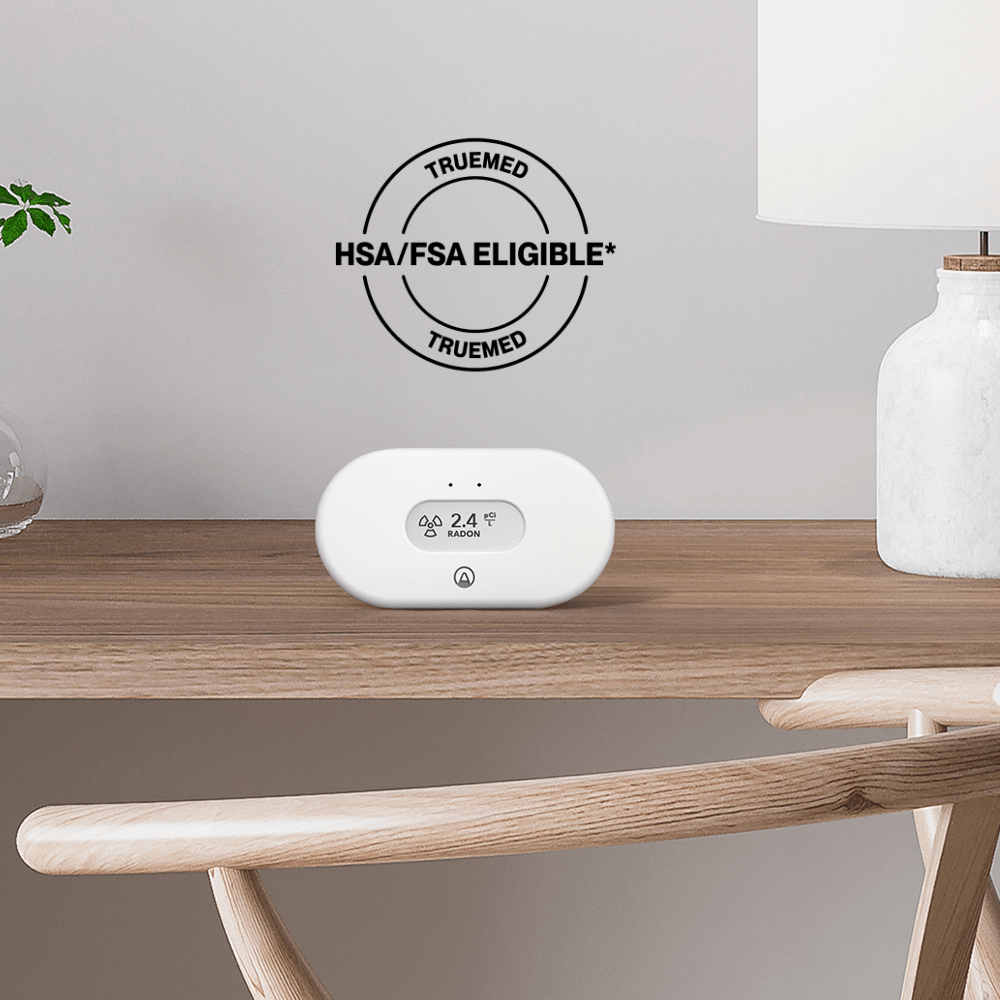
View Radon
Smart radon monitor for the basement or ground floor, with remote access to your readings.
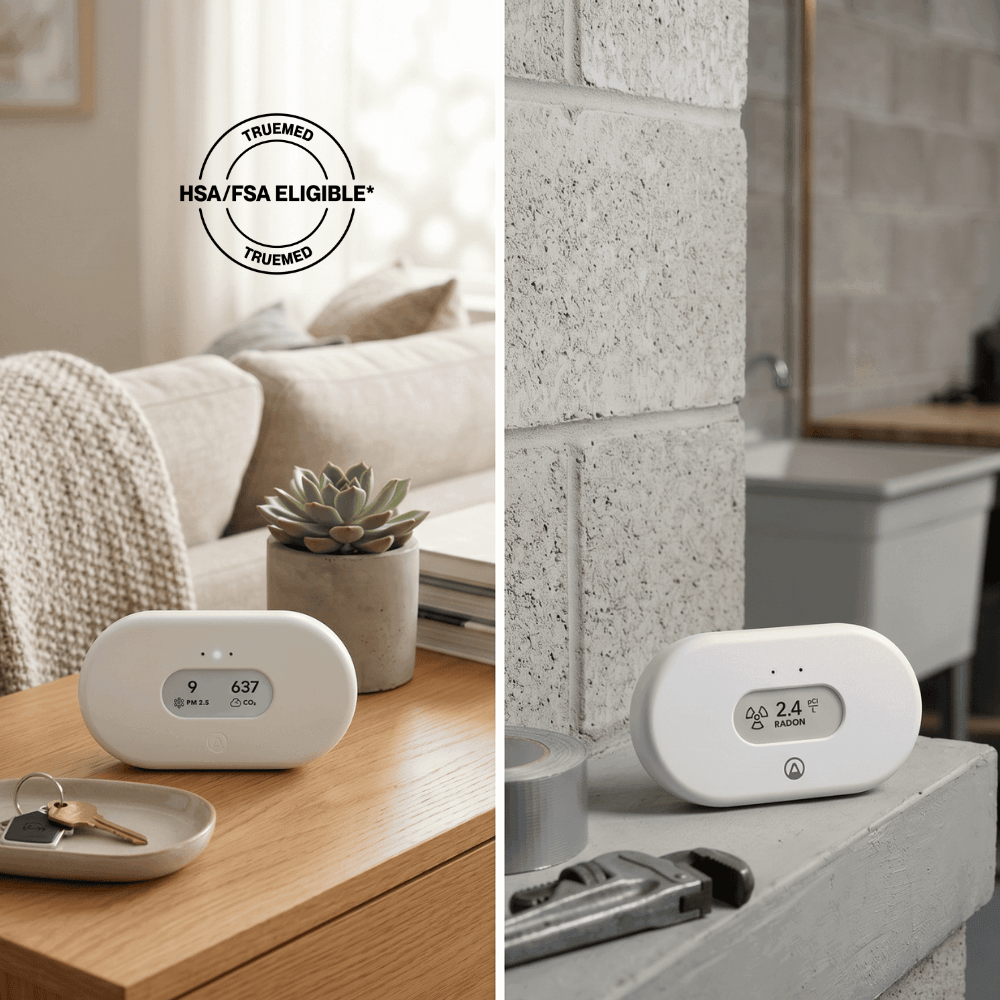
Living Room + Basement
View Radon for the basement plus View Plus for complete air quality in your main living space.
Read our guide, How to test for radon, for more detail.
Do people actually act on their radon data?
Yes: Airthings’ radon data shows that once people start monitoring their homes and identify they have radon, many go on to mitigate.
The graph below shows radon data from 200 connected Airthings monitors with a radon sensor located in basements across Norway. The red line shows radon levels captured across 200 consecutive weeks (just under four years). As shown, there is a downward trend, with average levels falling from around 200 Bq/m³ to around 100 Bq/m³ over the period. While this data comes from Norwegian homes, it suggests that once people can see their radon levels, they act on them.
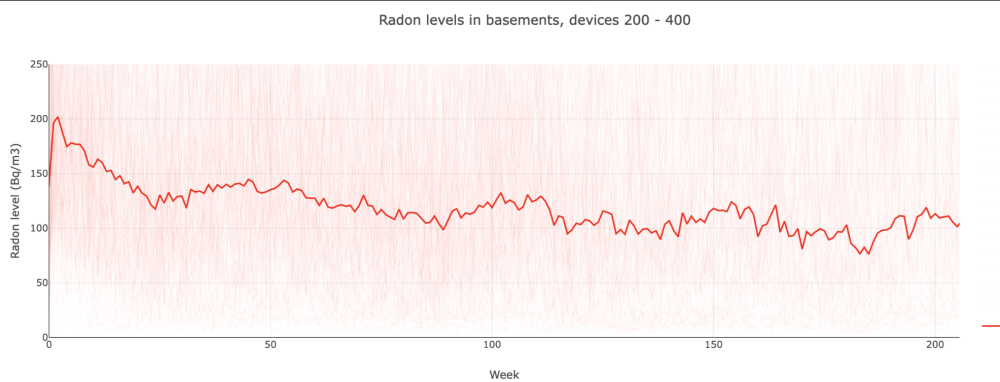
Airthings data summary from the graph above:
- Between week 2 and week 54, devices show a radon reduction from 201 Bq/m³ to 141 Bq/m³ — a 30% reduction
- Between week 12 and week 64, devices show a reduction from 160 Bq/m³ to 118 Bq/m³ — a 27% reduction
Frequently Asked Questions (FAQ)
How much does a radon mitigation system cost?
In the US, a professionally installed active sub-slab depressurization system typically costs $1,200–$2,500. Homes with crawl spaces that need encapsulating can add $500–$1,500, and large homes may need more than one suction point. DIY sealing costs around $100–$300 but rarely fixes high levels on its own.
What is a radon mitigation system?
It’s a permanent system that stops radon building up indoors. The most common type, active sub-slab depressurization, uses a pipe through the slab and a continuously running fan to pull radon from the soil beneath your home and vent it safely outside, above the roofline.
Does homeowner’s insurance cover radon mitigation?
In almost all cases, no. Insurance typically views radon as a naturally occurring environmental hazard rather than “sudden and accidental” damage. However, some state programs offer grants or low-interest loans for radon reduction.
How long does a radon fan last?
A high-quality radon fan is designed to run 24/7 and typically lasts between 5 and 10 years. Check your radon levels regularly with a continuous monitor to make sure the fan is working and your home’s radon levels remain below 4.0 pCi/L.
Will a radon system affect my energy bill?
An active system pulls air from under your house, not from inside it. While the fan uses a small amount of electricity (similar to a 60-watt lightbulb), it should not significantly impact your heating or cooling costs if installed correctly.
Can I deduct radon mitigation from my taxes?
If you are performing the mitigation for medical reasons (prescribed by a doctor) or if it is part of a home office improvement, you may be able to deduct a portion of the cost. Consult a tax professional for the latest IRS guidelines.
How long does radon mitigation take?
A professional sub-slab depressurization system can typically be installed in a single day. Most jobs take between three and five hours. More complex installations involving crawl spaces or multiple suction points may take a full day. You can return to normal activity in the home immediately after installation.
How do I find a certified radon mitigation contractor?
The EPA recommends using a state-certified or nationally certified contractor. You can search for a qualified professional in your area using the EPA’s official contractor directory. Look for contractors certified by the National Radon Proficiency Program (NRPP) or the National Radon Safety Board (NRSB).
Will radon mitigation increase my home’s value?
A professionally installed and certified mitigation system is generally viewed positively by buyers and their inspectors. It demonstrates that the problem has been identified and properly resolved, which is preferable to an untested home. Some real estate markets, particularly in high-radon states, now expect radon test results as a standard part of disclosure.
How much does it cost to retest for radon after mitigation?
A short-term test kit typically costs $15–$50 each time you test. A continuous digital radon monitor costs from around $150 as a one-off and keeps measuring for years, so it’s the best way to confirm that the mitigation worked and that it continues to be effective. Radon levels can change if the soil shifts underneath your home or if you carry out renovation work, so continuous monitoring provides the best peace of mind.
What happens if my radon levels are still high after mitigation?
Contact your mitigation contractor. Many reputable installers offer a post-mitigation guarantee and will return to diagnose the issue. Common causes of persistent high levels include an undersized fan, insufficient suction points, or new cracks developing in the foundation. A continuous radon monitor will show you when levels rise again, so you can act quickly.
Does radon mitigation work in all types of homes?
Yes, though the method varies. Sub-slab depressurization works for homes built on concrete slabs or with basements. Crawl space encapsulation combined with ventilation is used for homes built over a crawl space. Block wall ventilation addresses radon entering through hollow concrete block walls. A certified contractor will assess your foundation type and recommend the right approach for your specific home.
Sources