Radon Map USA & Canada: Radon Levels Near You
TL;DR: Radon levels vary, but some areas are more likely to have more radon due to geology and soil composition. Both the US EPA and Health Canada recommend that every home be tested for radon. Radon maps can provide a rough guide as to whether the area you live in is more likely to be affected by high radon. Airthings’ interactive radon map can help you find out the approximate radon level in your city, state, or province. Just search by ZIP or Post Code on https://www.airthings.com/air-quality-map.
Radon is an invisible, odorless natural gas that comes from the breakdown of the radioactive element uranium in the ground. It can enter homes and buildings through cracks in foundations or pipes and build up to dangerous indoor levels, increasing the risk of inhalation. It is the leading cause of lung cancer among non-smokers in both the United States and Canada. In the US, it is linked to about 21,000 lung cancer deaths each year (EPA), and in Canada to about 16% of lung cancer deaths (Health Canada).
Are you living in a high-radon area?
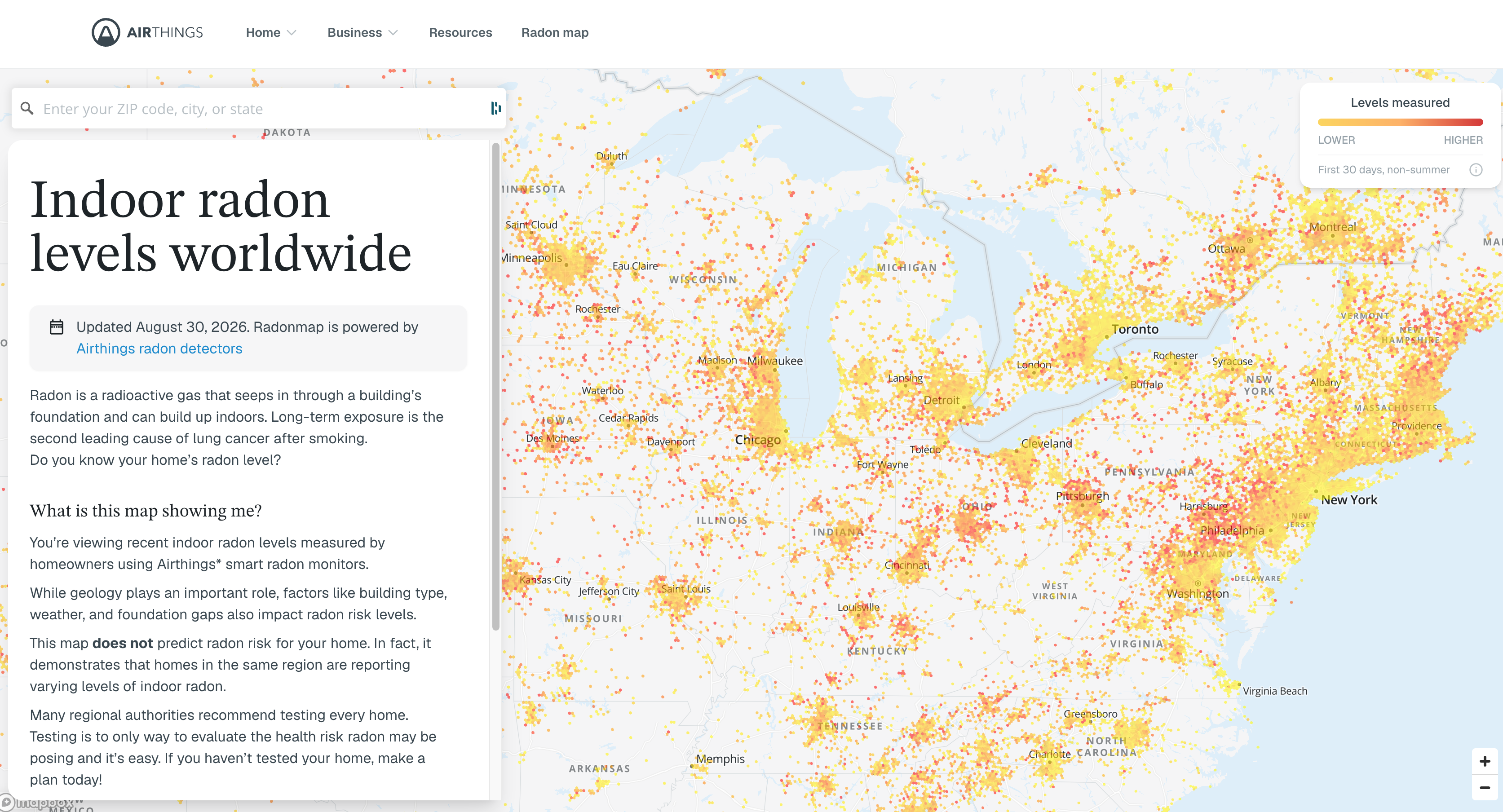
Radon is found everywhere, but because geology and soil composition vary, some areas are naturally higher in radon, making elevated indoor levels more likely. It’s important to know that any home can have radon, and levels can vary widely even between neighboring homes, which is why the EPA and Health Canada both recommend that every home be tested for radon. Use the Airthings radon map below to see the approximate radon level in your city, state, or province. This map is powered by thousands of active Airthings radon sensors deployed across the world, combined with historical data, giving you a regularly updated look at average local exposure rates.
Check radon levels in your area
Search your city, state, or province on the Airthings radon map to see average indoor radon levels measured by Airthings monitors near you.
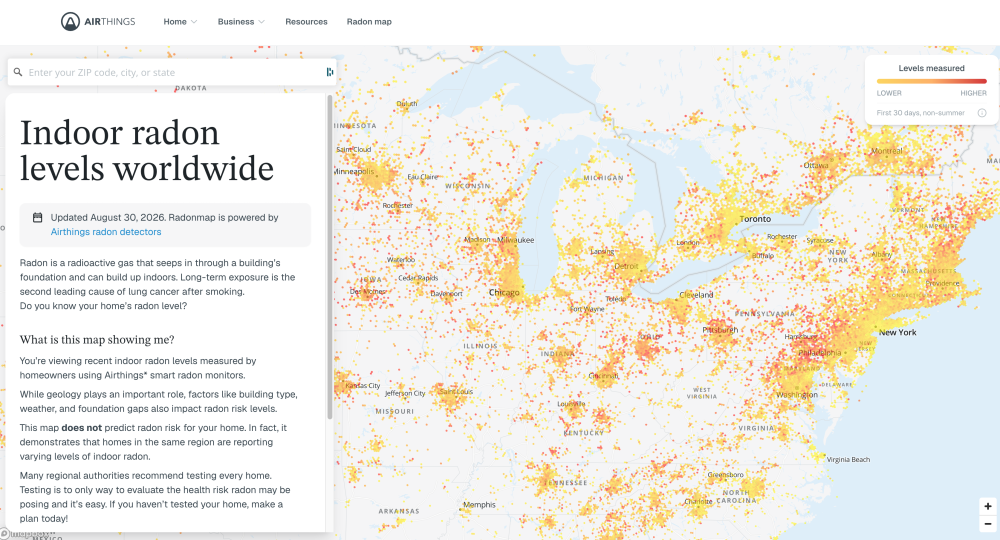
Note: This includes users who are mitigating after discovering they have high radon. Improvements to the map to show pre-mitigation levels are in the works.
Radon guidelines in the US and Canada
The US and Canada measure radon in different units and use different guideline levels. In the US, radon is measured in picocuries per liter (pCi/L). In Canada, it is measured in becquerels per cubic meter (Bq/m³). 1 pCi/L is equal to 37 Bq/m³.
United States: EPA radon zones
The Environmental Protection Agency (EPA) has categorized every US county into three Radon Zones to help governments and homeowners evaluate their risk.
- Zone 1 (High Risk — Red): Counties with a predicted average indoor radon screening level greater than 4.0 pCi/L (148 Bq/m³). This is the EPA’s official Action Level, where mitigation is highly recommended.
- Zone 2 (Moderate Risk — Orange): Counties with a predicted average indoor level between 2.0 and 4.0 pCi/L. The EPA still suggests homeowners in these zones consider fixing their homes.
- Zone 3 (Low Risk — Yellow): Counties with a predicted average indoor level less than 2.0 pCi/L.
Important Note: The EPA zones were created to help building code officials target radon-resistant construction practices. They were never intended to determine if an individual home needs to be tested.
Canada: Health Canada’s radon guideline
Canada does not divide the country into official radon zones. Instead, Health Canada sets a single guideline of 200 Bq/m³ (about 5.4 pCi/L) for homes. If your long-term test result is above this level, Health Canada recommends reducing it:
- Above 600 Bq/m³: take action within one year.
- Between 200 and 600 Bq/m³: take action within two years.
Health Canada recommends a long-term test of at least three months, ideally during the fall and winter, when radon levels are typically highest.
The radon map is a guide to radon, not a guarantee
Looking at a radon map is an excellent first step for awareness, but it comes with a massive caveat: Radon is highly localized and completely unpredictable.
You cannot rely on a map or your neighbor’s test results to guarantee your family’s safety.
Because radon enters through microscopic cracks in a foundation, two houses built right next door to each other can have wildly different levels. Your neighbor’s house might test low at 1.2 pCi/L (44 Bq/m³), while your house, built on slightly looser soil, with a slightly deeper basement, or with different ventilation, might test at a dangerous 8.0 pCi/L (296 Bq/m³).
Furthermore, new construction homes are often built to be highly energy-efficient and airtight. While this saves money on heating and cooling, it also acts as a vacuum, trapping radon inside more effectively than older, draftier homes in the exact same neighborhood.
What to do if you live in a high-radon area?
If the map shows high radon levels in your area, if you live in an EPA Zone 1 or Zone 2 county, or if you simply want absolute peace of mind, you must test your own indoor air.
Because radon levels fluctuate daily based on temperature, barometric pressure, and HVAC usage, a single short-term test can be misleading. The EPA and Health Canada both recommend long-term testing (at least 90 days) for the most accurate picture of your average, and a continuous digital monitor makes that easy.
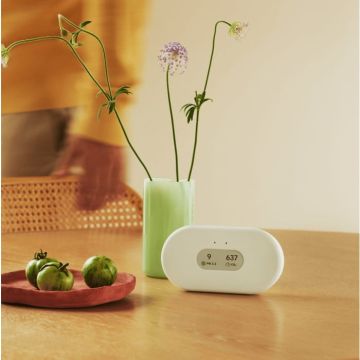
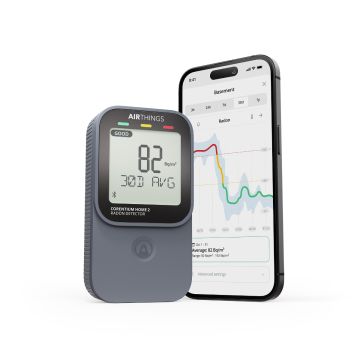
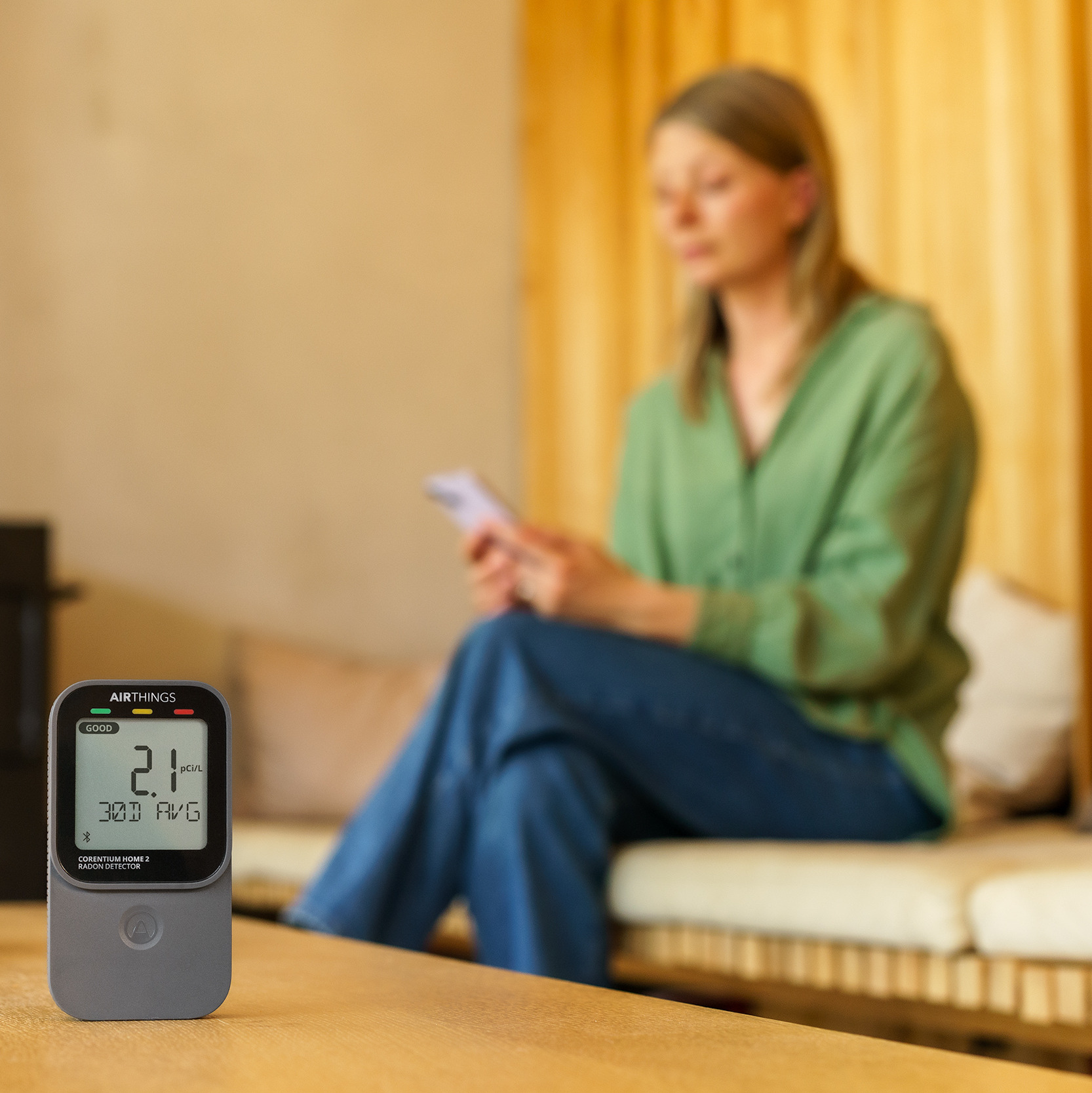
- Use a continuous digital radon monitor: Install the Airthings Corentium Home 2 or View Plus in the lowest lived-in level of your house (usually a basement or ground-floor living room).
- Understand your radon average: You will see a useful picture within the first 30 days, but both the EPA and Health Canada base their guidelines on long-term averages, so let the monitor run for at least 90 days before you judge your annual average.
- Act if levels are high: If your long-term average is consistently at or above 4.0 pCi/L in the US, or above 200 Bq/m³ in Canada, contact a certified radon mitigation professional (in Canada, look for C-NRPP certification). Radon mitigation systems are straightforward, effective, and long-lasting. We also have a guide to some DIY radon mitigation measures you can try first.
- Continue to monitor: Even after mitigating for radon, you should continue to track your radon levels. Mitigation systems can fail and soil conditions can change, meaning that radon can still be a problem. Continuous monitoring helps you know your home is safe.
To learn more about testing your home for radon, read our guide: How to get started with radon testing in 2026.
Frequently Asked Questions (FAQ)
What states have the highest radon levels?
While radon is found in all 50 US states, states in the Midwest and Appalachian regions typically report the highest concentrations due to their specific geological makeup (high levels of granite and uranium in the soil). States like Iowa, North Dakota, South Dakota, Pennsylvania, and Ohio have extremely high percentages of homes testing above the EPA action limit of 4.0 pCi/L.
Which Canadian provinces have the highest radon levels?
Radon is found in every province and territory. Health Canada’s cross-Canada survey found the highest percentages of homes above the 200 Bq/m³ guideline in Manitoba, Saskatchewan, New Brunswick, and Yukon, but high-radon homes have been found in every region, including major cities like Calgary, Winnipeg, and Ottawa.
Is radon worse in the summer or winter?
In the US and Canada, indoor radon levels are almost always higher in the winter. When you turn on your central heating, it changes the air pressure inside the house, creating a “stack effect” that aggressively pulls more radon gas up through the foundation. Additionally, windows and doors stay tightly shut in the winter, trapping the gas inside. However, radon can be high in summer. Air conditioning systems can also create the “stack effect”.
Do I need to test if my home doesn’t have a basement?
Yes. While basements are closest to the soil and often have the highest levels, homes built on concrete slabs or over crawlspaces are absolutely still at risk. Radon easily travels through concrete pores, construction joints, and floorboards into your main living areas. Every home should test for radon.
Sources

-
 September 14, 2026| Posted in Guides| Annabel Robertson| 3562
How to choose the best radon detector for your home (kits vs monitors)