


TL;DR: Wildfire smoke travels thousands of miles, bringing harmful PM2.5 (fine particulate matter) into your home. To protect your indoor air quality during a fire, keep windows closed, run True HEPA air purifiers, set your HVAC to "recirculate," and dedicate a sealed "clean room." Don't forget to monitor your indoor CO2 levels—sealing your home traps exhaled carbon dioxide, which can cause headaches and fatigue.
With the alarming increase in wildfires, it's natural to worry about how these fires, even if they aren't directly on your doorstep, can affect you. Concerningly, wildfire smoke can travel hundreds or even thousands of miles and negatively impact the air quality of an area for weeks on end. It can often feel like you're powerless against the unrelenting forces of nature.
Every year, people have to leave their homes to flee these destructive blazes, and an average of 7.2 million acres of land are impacted in the U.S. alone. Stopping the causes of these wildfires and defeating them at their source is the long-term solution, but in the short term, how can people protect themselves from this polluted air?
Fortunately, there are steps one can take to safeguard their home and loved ones from wildfires' destructive impacts and air-polluting qualities. Research shows wildfires and the subsequent contamination of air can have long-lasting effects on outdoor and indoor air quality, posing health hazards for all who breathe this air. Local governments, the EPA, and regional news and weather stations frequently report on wildfires in their area and issue warnings accordingly.
However, regarding indoor air pollution during wildfires, there's a lot more you can do to ensure the air you breathe is safe from the toxins in the smoke-saturated outdoor air. In this article, we provide essential tips and strategies to help you shield your home against the perilous air conditions associated with wildfires. By implementing these measures, you can establish a healthier indoor environment and mitigate potential harm caused by smoke, carbon dioxide, and particulate matter.
Tips to protect against wildfire air:
First and foremost, follow your local government's advice, including when to remain indoors and avoid unnecessary travel. Here is our curated list of top tips to help with wildfire smoke indoors.
1. Keep windows and doors closed
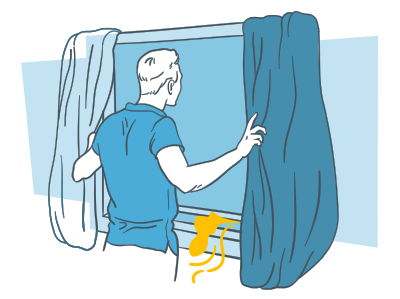 The Environmental Protection Agency (EPA) recommends keeping windows and doors closed if you're in a wildfire zone. If you cannot adequately filter the air in your entire house, designate one space as a "clean room." This means choosing a single, enclosed room (like a bedroom) with no fireplace and minimal windows where you focus your air-purifying efforts. Keep the room completely shut, run a portable air purifier continuously, and avoid activities that create additional indoor pollution, such as burning candles, frying food, or vacuuming. Use fans and air conditioning to stay cool; if you cannot stay cool with the windows closed, seek shelter elsewhere.
2. Air purifiers
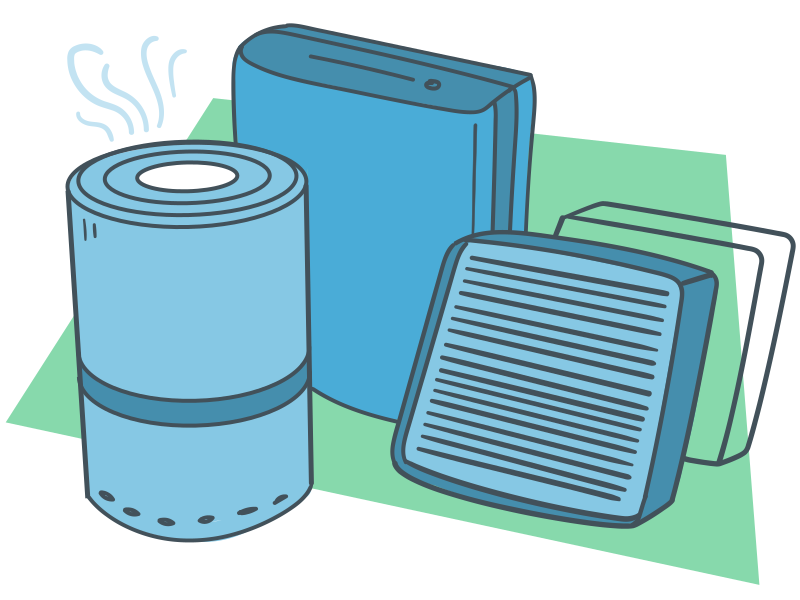
When smoke levels are particularly high, experts encourage staying indoors with the windows and doors closed. However, your indoor air needs to be actively maintained. Portable air purifiers equipped with True HEPA filters can capture fine smoke particles and chemicals, keeping them away from your loved ones. Additionally, if you have a central HVAC system, upgrade your filter to a MERV 13 rating or higher to catch microscopic smoke particles.
3. Help prevent the bad air from coming in
Every home is different, so environmental agencies provide specific solutions to prevent polluted wildfire air from entering your home through your cooling systems:

- Central HVAC: If you have an HVAC system with a fresh air intake, set the system to "recirculate" mode, or close the outdoor intake damper.
- Window AC units: Close the outdoor air damper. If you cannot close the damper, do not use the window air conditioner. Ensure the seal between the air conditioner and the window is as tight as possible.
- Portable AC units: If you have a portable air conditioner with a single hose (vented out of a window), do not use it in smoky conditions, as it pulls outdoor air inside. If you have a dual-hose portable AC, ensure the seal between the window vent kit and the window is airtight.
4. Keep an eye on particulate matter
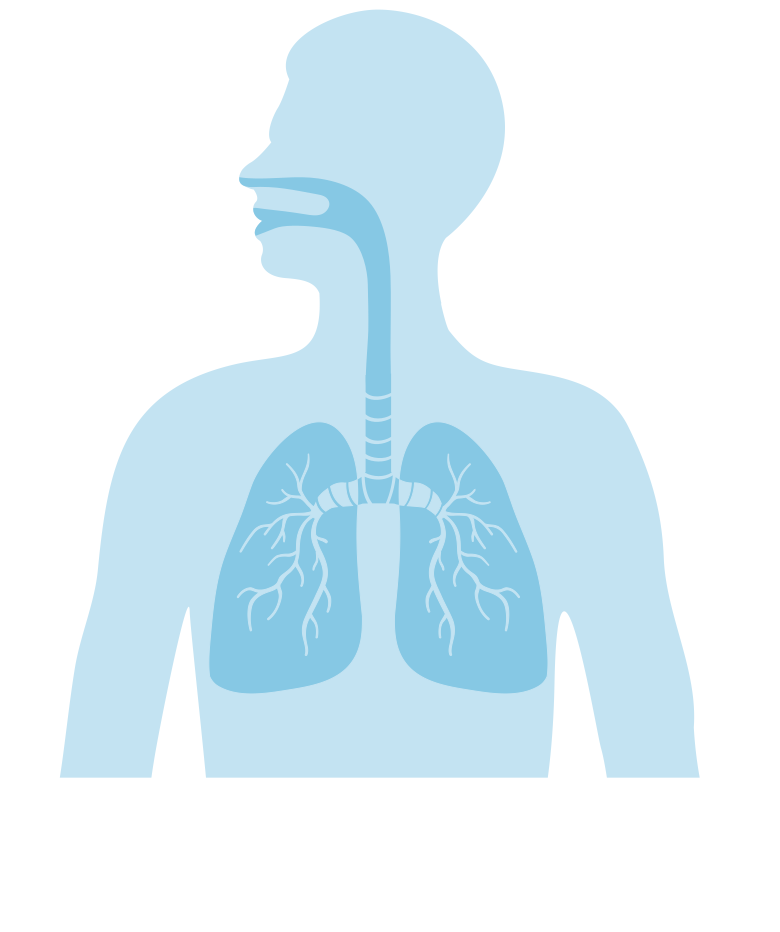
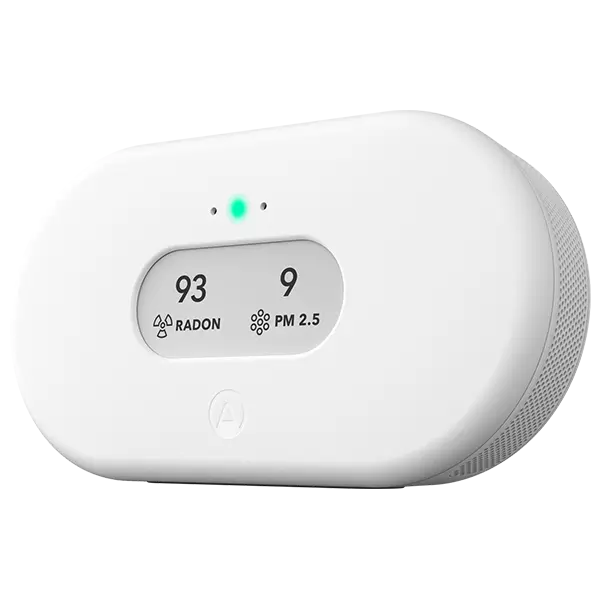
Particulate matter, or PM, isn’t just one contaminant or pollutant. It’s a range of particles of dust, dirt, and liquids that become suspended in the air. Some of these are large enough to see, like smoke from wildfires. but the most harmful are smaller, invisible particles. The healthier the air, the fewer PMs. Learn everything you need to know about particulate matter here →
5. N-95 dust masks
 Though the name isn’t glamorous, an N-95, KN95, or KF94 respirator mask is a must for ash and smoke protection if you have to go outside. Standard cloth masks, surgical masks, or basic masks typically found in the hardware store are designed for DIY activities and will not protect your lungs effectively from microscopic wildfire smoke.
6. Consider carbon dioxide
-1.png)
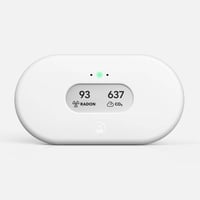
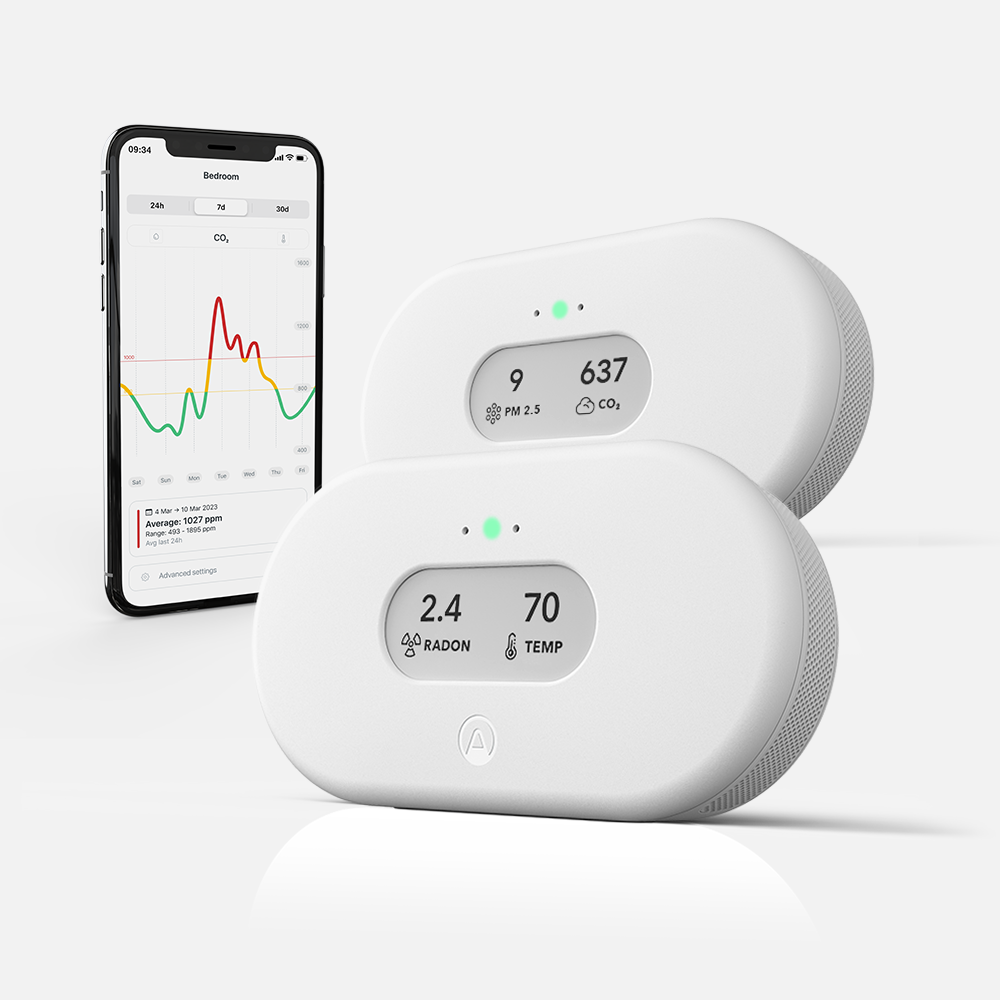
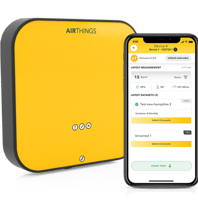
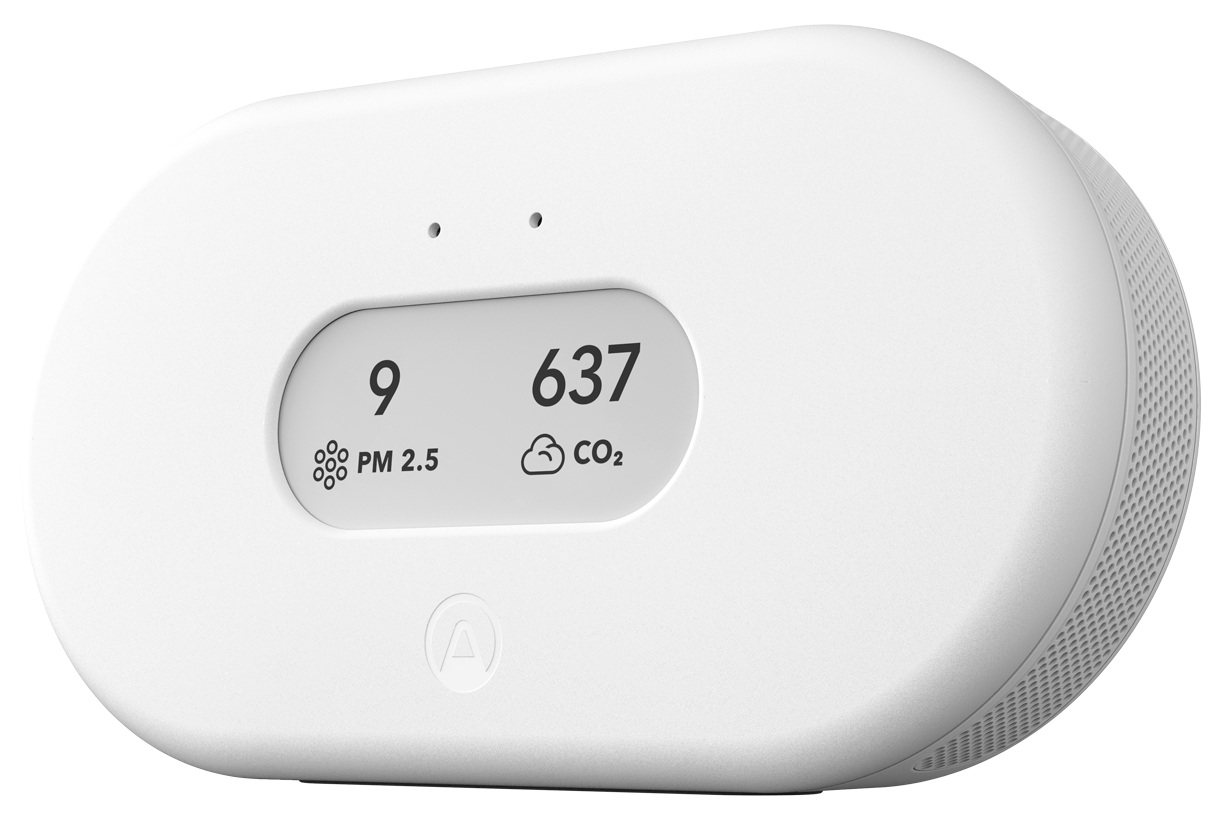
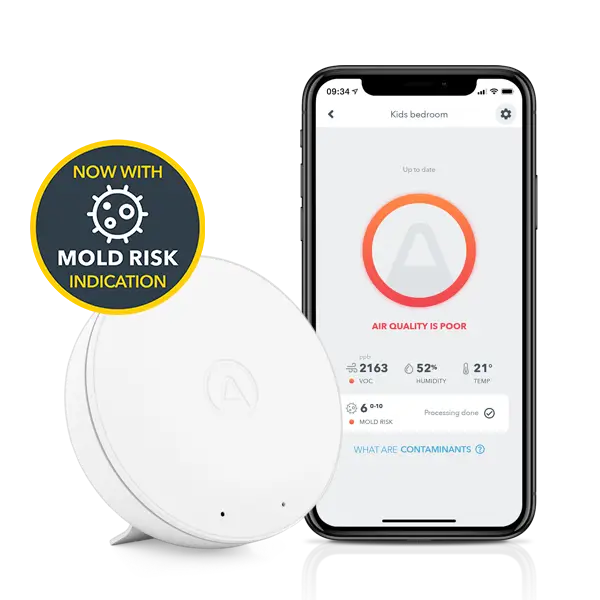
Not to be confused with carbon monoxide, forest fires release excess CO2 into the atmosphere. At the same time, the trees that would have taken in CO2 to produce oxygen through photosynthesis are destroyed. This is bad for the environment and bad for your health. By monitoring CO2 indoors, you can ensure you can breathe easily.
Frequently Asked Questions (FAQs) About Wildfire Smoke Indoors
What is a "clean room" for wildfire smoke? A clean room is a dedicated, enclosed space in your home (usually a bedroom) designed to keep smoke out. To create one, close all doors and windows, run a HEPA air purifier continuously, and avoid burning candles, cooking, or vacuuming, which can add to indoor pollution.
Does running the AC help with wildfire smoke? Yes, but only if configured correctly. Central AC systems should be set to "recirculate" so they aren't pulling in smoky air from outside. If using a window AC, close the outdoor air damper. Single-hose portable ACs should be turned off, as they can draw smoke indoors.
Are air purifiers effective against wildfire smoke? Yes. Air purifiers equipped with True HEPA filters are highly effective at capturing PM2.5, the microscopic and most dangerous particles found in wildfire smoke. Run them continuously in a closed room for the best results.
How do I clear wildfire smoke out of my house? The fastest way to clear smoke out of your house is to close all windows and doors and run a True HEPA air purifier on its highest setting. Alternatively, you can run your central HVAC system continuously if you have upgraded your air filter to MERV 13 or higher.
Why am I getting headaches during a wildfire if my windows are closed? If your windows are tightly closed to keep smoke out, the carbon dioxide (CO2) you exhale gets trapped inside. High CO2 levels commonly cause headaches, grogginess, and fatigue. Using an indoor air quality monitor can tell you when CO2 is too high and when it is safe to briefly open a window to ventilate.

%20(1).webp)
%20(1).webp)