
Before
Added to bag
You have no items in your shopping cart.
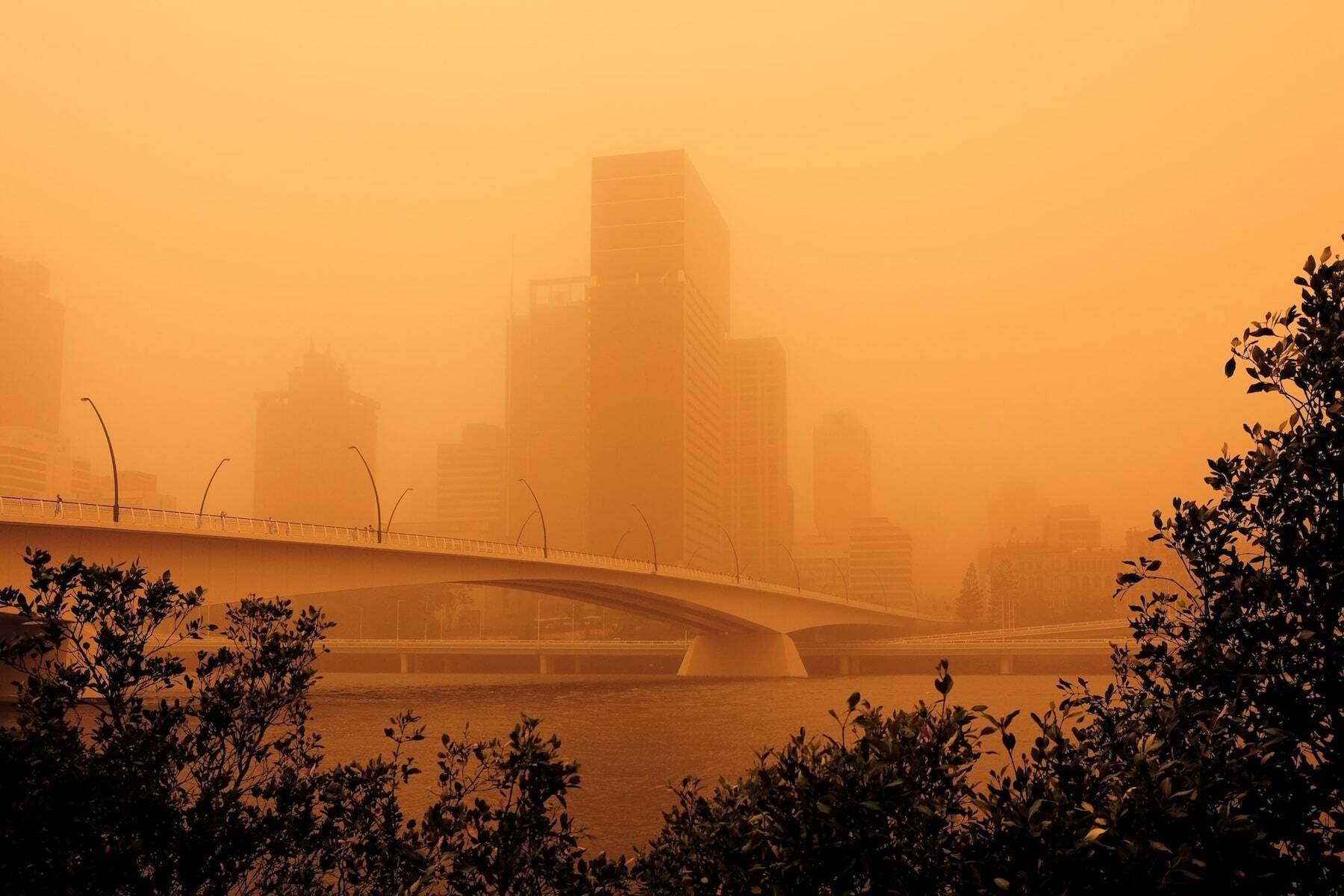
Learn how to protect your home from the dangers of wildfire smoke with real-time air quality insights and active pollutant mitigation.
Monitor your air
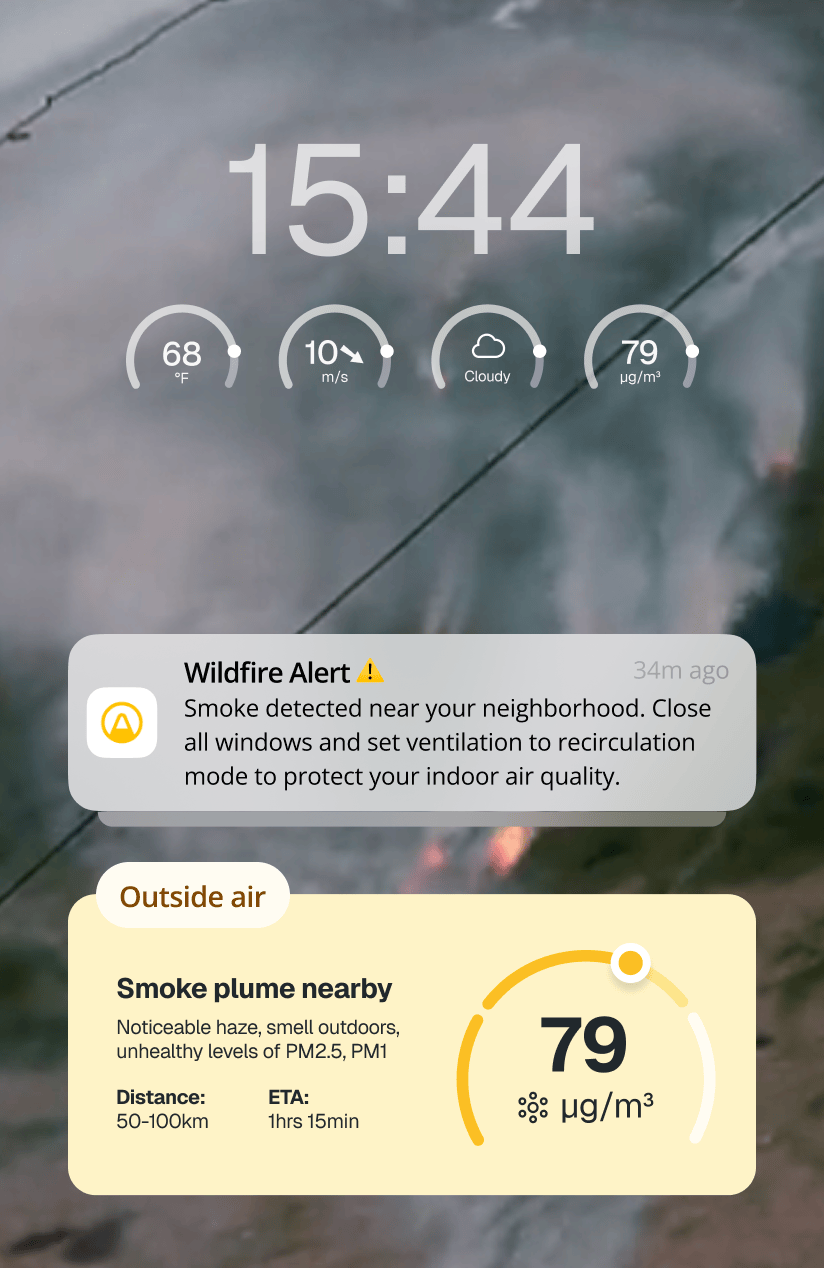
Wildfire smoke alert ⚠️
34m agoYour indoor air is affected by outside wildfire smoke, reaching unhealthy levels
Wildfire smoke contains harmful pollutants that adversely affect human health. Fine particulate matter (PM2.5 and PM1) poses the greatest risk, particularly to children, the elderly, and those with pre-existing conditions.
+24 000
Deaths linked to wildfire smoke in the US every year
+17 000
Strokes linked to wildfire smoke in the US every year

Stay indoors unless absolutely necessary, and keep windows and doors closed.
Create a "clean room" where you and your family can spend most of your time. Choose a room with as few windows as possible, use a damp towel to block gaps under doors, switch your HVAC to recirculate mode, and run an air purifier rated MERV 13 or higher.
Avoid activities that add to indoor pollution:
Monitor your indoor air quality using an air quality monitor to track PM2.5 levels. If levels remain high despite your precautions, consider relocating to a public shelter or a home outside the affected area.
Stay informed: watch local news and check the AirNow Fire and Smoke map to track conditions in your area.
Most importantly, follow your local government's advice, including when to remain indoors and avoid unnecessary travel. If an evacuation order is issued for your area, leave immediately. Know your evacuation zone in advance and keep a go-bag ready with essentials like documents, medication, and a few days of supplies.
When PM2.5 from wildfires enters a home with high radon, a dangerous synergy occurs. The smoke particles "capture" the radioactive gases, keeping them suspended in the air you breathe and eventually trapping them in your respiratory system. Monitoring these pollutants keeps you informed, helping you know when to act to protect your family.
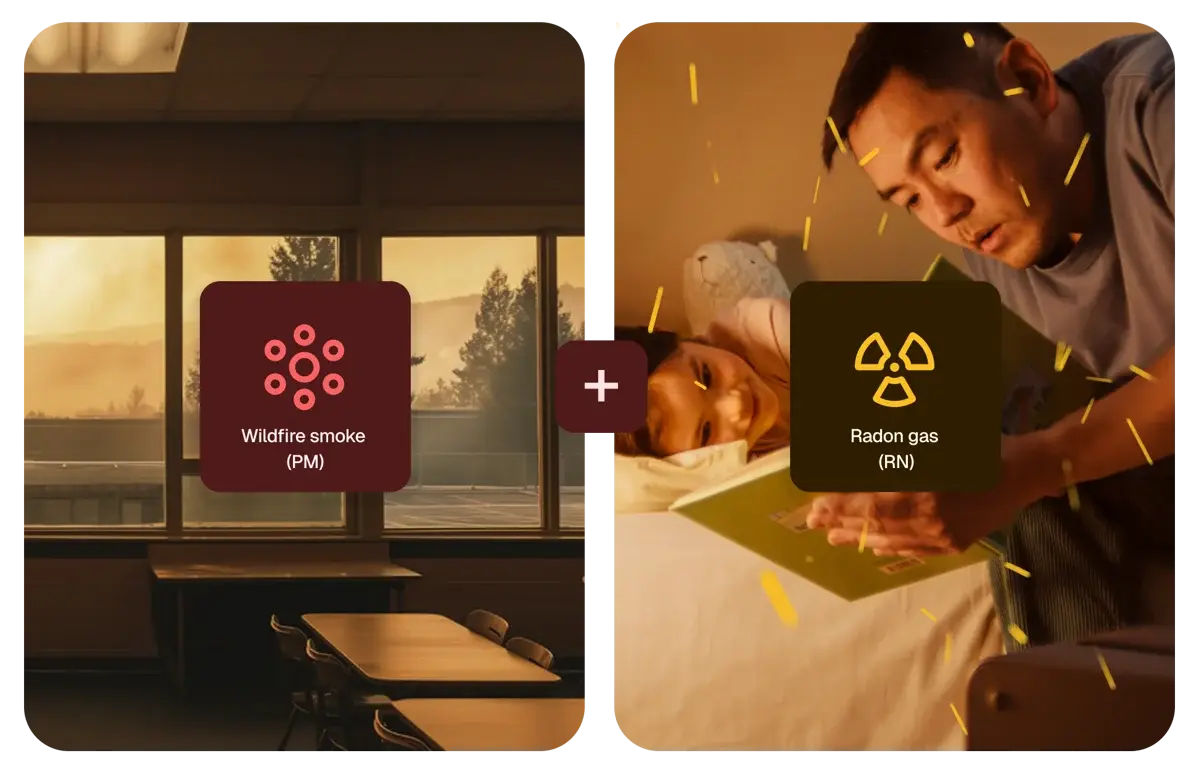
You can't manage what you don't measure. The Airthings View Plus monitor is the first of its kind to measure both Radon and PM levels simultaneously — letting you know exactly when to take action.
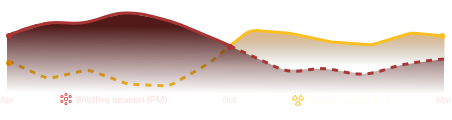
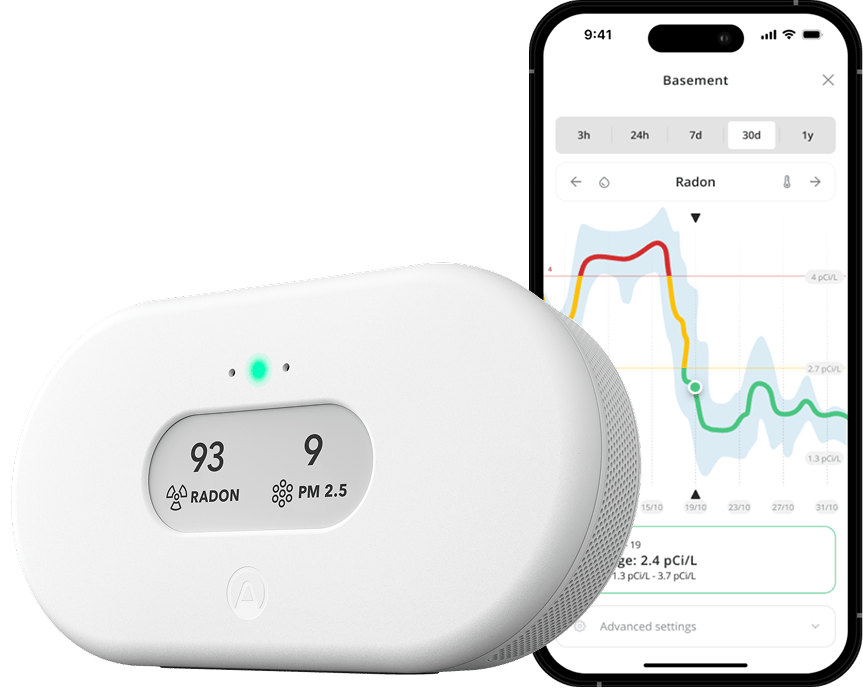
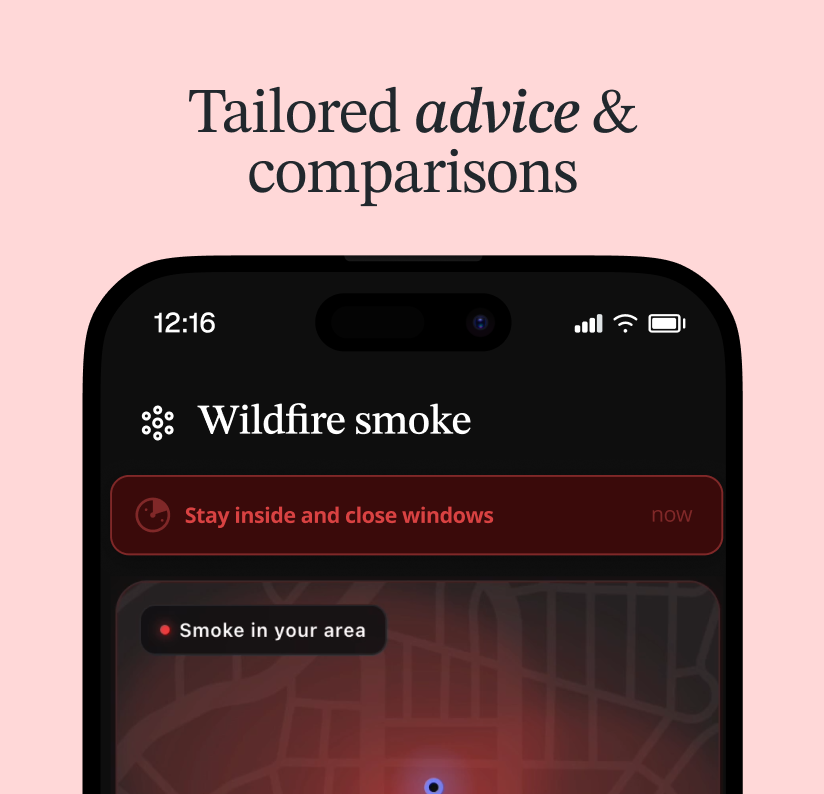
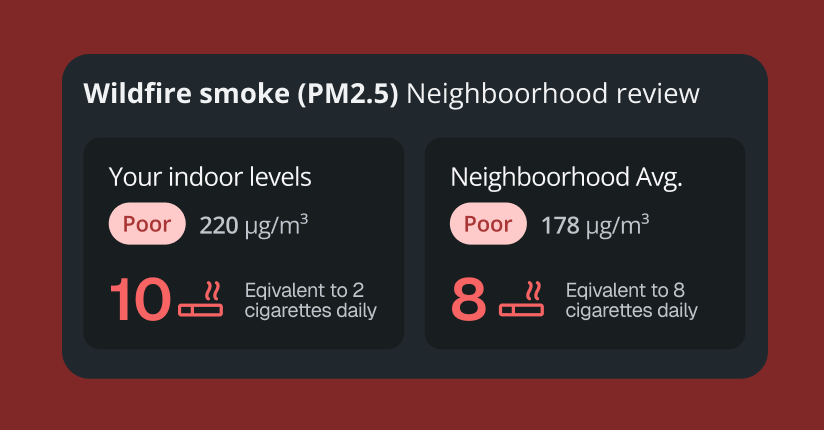
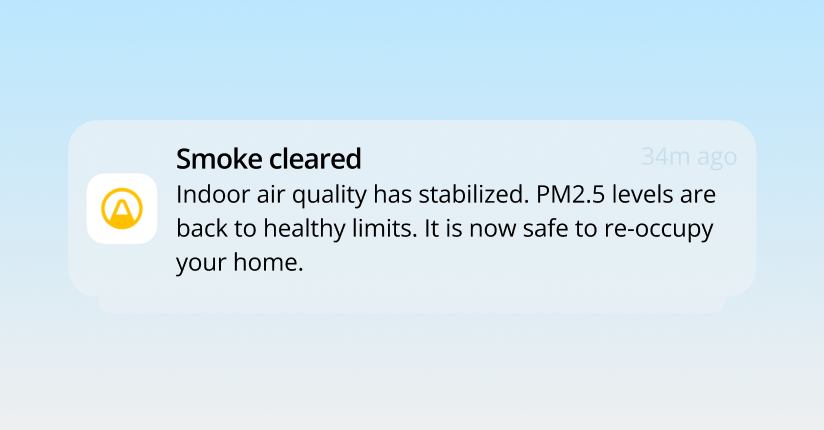
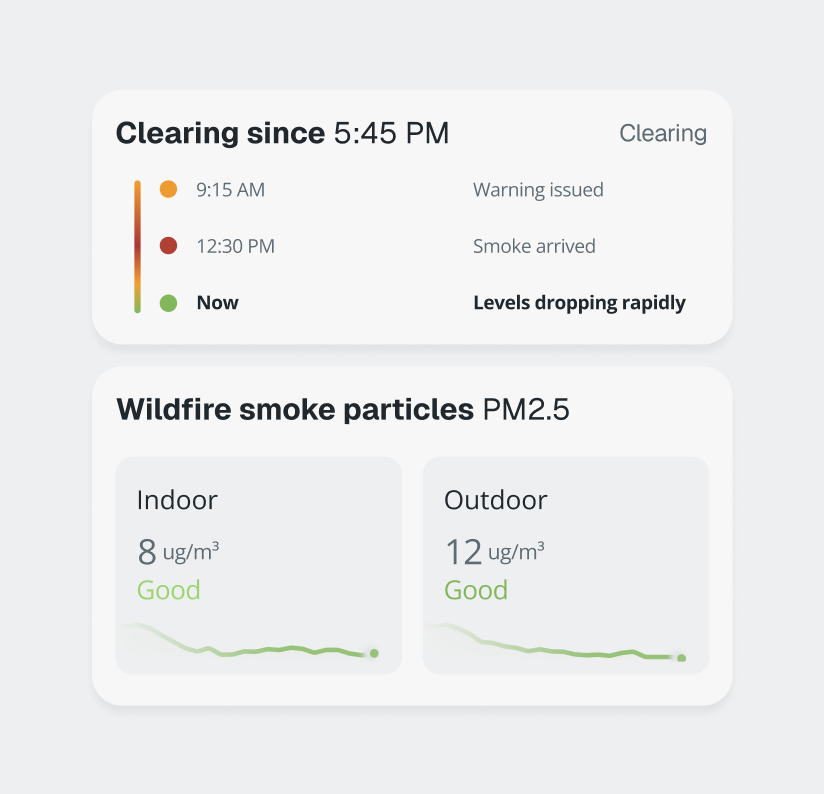
The only platform that tracks indoor and outdoor wildfire smoke in combination with Radon detection — keeping you safe all year round.
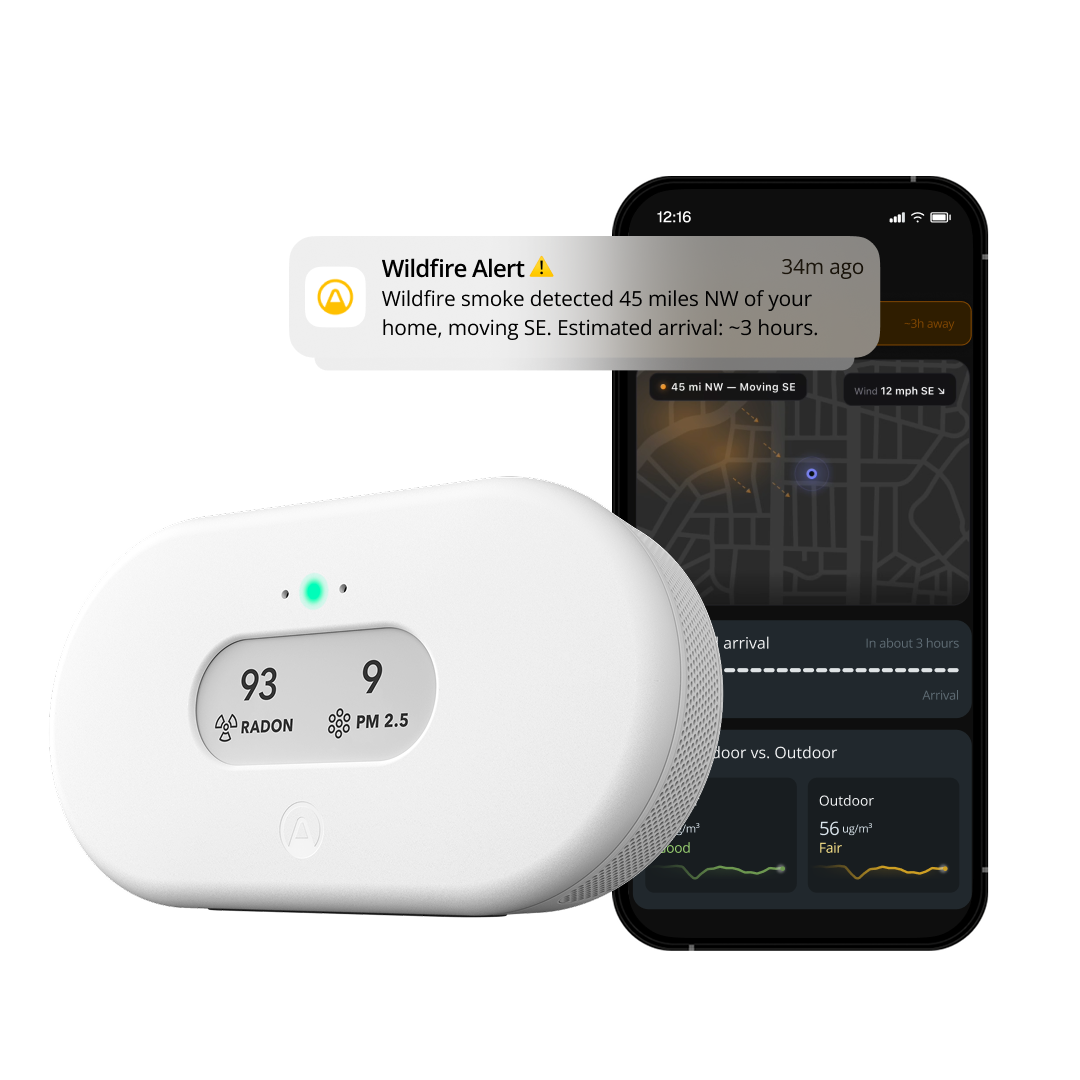
Wildfire smoke is packed with PM2.5 — tiny particles invisible to the eye but small enough to enter your bloodstream. Recent studies show long-term exposure significantly increases the risk of stroke and cardiovascular disease. Even short-term exposure can trigger immediate respiratory effects.
Yes. Wildfire smoke travels vast distances. Even if you can't see the flames, fine particles (PM2.5) can settle into your local environment and infiltrate your home — making indoor air quality monitoring essential during fire season regardless of proximity.
Research implies that PM2.5 acts as a "delivery vehicle," allowing radioactive radon particles to hitch a ride on tiny dust and smoke to travel deeper into your lungs. Studies show that when both are present, the health risks to your heart and lungs are significantly amplified compared to when either is measured alone, making it critical to monitor both for a complete picture of your air quality. The View Plus is the first of its kind to measure both Radon and PM levels simultaneously, letting you know exactly when to take action.
Monitor: Use a device that tracks both PM2.5 and radon simultaneously to see the full picture — such as the Airthings View Plus.
Filter: Use HEPA air purifiers to remove the smoke particles that radon progeny attach to.
Mitigate: If your radon levels are consistently high (above 4 pCi/L), consider a radon mitigation system. Reducing radon lowers the overall toxicity of any smoke that enters your home.
Your monitor — specifically the View Plus — is equipped with a laser-scattering sensor that tracks PM2.5 in real-time. During wildfires, smoke can infiltrate your home even with windows closed. Your monitor gives you the "hidden" data you need to fully ensure that your home is a safe space.
Sultani, M. A., Et.al (2026) Interaction between radon progeny and particulate matter in an urban environment
Lee Et al. (2025) Ambient beta particle radioactivity and lung cancer survival: Results from the Boston Lung Cancer Study
Dong, S., Et.al (2022) Synergistic effects of particle radioactivity (gross β activity) and particulate matter ≤2.5 μm aerodynamic diameter on cardiovascular disease mortality
Enjoy more personalized experience by shopping in your local store.
Promo code applied!