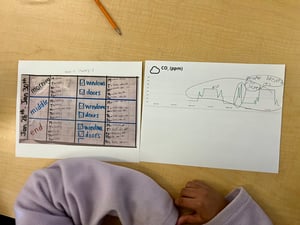
At UCLA Lab School, a unique collaboration between educators, CONNECT researchers, architects and designers, and Airthings is transforming how students engage with their environment. What began as a focus on indoor air quality—particularly CO₂ levels and “stuffy air”—has evolved into a student-led learning project.
Students take charge of the air they breathe with IAQ monitoring
From the very beginning, the students developed a natural curiosity toward the Airthings sensors. They didn’t just observe the data—they interacted with it. They asked questions, created posters, even wrote a rap song about air quality. Before entering the classroom, some students paused to catch their breath after playing outside, already thinking critically about how CO₂ levels might be affected.
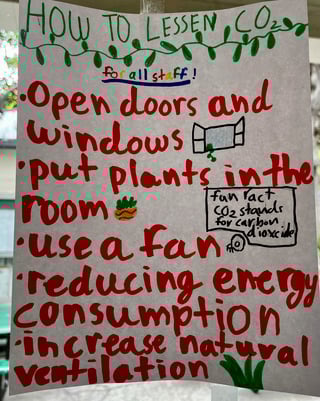
Poster created by students.
Making air quality visible
This hands-on approach has made indoor air quality tangible. Students regularly monitor the dashboard, studying real-time data and drawing connections between their environment and how they feel. When the air becomes too stuffy, they suggest moving lessons outdoors, demonstrating both awareness and initiative.
Students teaching students
One of the most notable aspects of the project is how knowledge spreads. Older students take on mentorship roles, teaching younger peers about CO₂, indoor air quality, and why it matters. The learning extends beyond the classroom—students share their insights with others in the school community, including kindergarten classes and staff.
Through this initiative, the students are developing environmental awareness and a sense of responsibility, while learning about broader challenges in a way that feels relevant to their everyday experience. We saw that this student-led project moves children from passive learning to active engagement. When they understand CO₂ and indoor air quality, they ask questions, share knowledge, and make simple changes to their classroom environment. This shows how access to real-time air quality data through Airthings sensors can support practical, student-driven learning while also contributing to better indoor conditions.
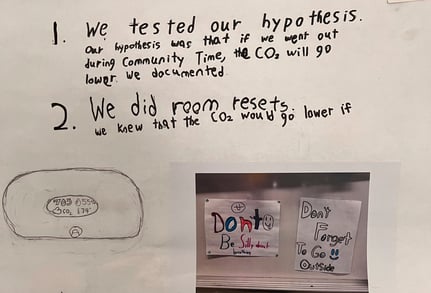
Testing the hypothesis: How leaving the room affects CO2 levels measured by the Airthings sensor.
You can read the full study here: https://www.perkinseastman.com/research/biorealism-today-lessons-learned-from-richard-neutras-ucla-lab-school/